
The pH Scale Explained: Acidity, Alkalinity, and Reading pH Values
The pH Scale
How do you read the pH Scale?
Acid vs. Base
One method used to Describe Chemicals is pH or "Potential of Hydrogen". A universally accepted scale for pH that describes chemicals as either "Acidic" or "Basic" is employed. This pH scale ranges from 0 to 14 with a pH of 7 being Neutral; a pH less than 7 being Acidic; and a pH greater than 7 being Basic. For example, when the Value begins at 7.0 and moves toward 0, Acidity is Indicated. When the pH moves from 7.0 toward 14, Basic (Alkalinity) is indicated. Hence, Acids are Divided from Bases by this Scale.
pH Number Scale
A useful category of solutions measured by the pH scale may be represented by a range of 0 to 14. For Example:-
pH 0 to pH 2 is Strongly Acidic
pH 3 to pH 5 is Weakly Acidic
pH 6 to pH 8 is Neutral
pH 9 to pH 11 is Weakly Basic
pH 12 to pH 14 is Strongly Basic
For Example:
- A pH Value of 4 is Ten Times More Acidic than a pH Value of 5 and 100 Times More Acidic than a pH of 6. (10x10).
Likewise, a pH of 10 is 10 Times More Basic than a pH of 9.
Pure Water is pH Neutral but when Mixed with Chemicals, the Solution Formed may Become either Acidic or Basic.
Vinegar Mixed with Water will be Acidic; Washing Detergents mixed with Water will, generally, be Basic.
Please Note:
Should chemicals be very basic or very acidic, severe harm may occur to the skin or to the eyes and caution must be exercised when handling such solutions.
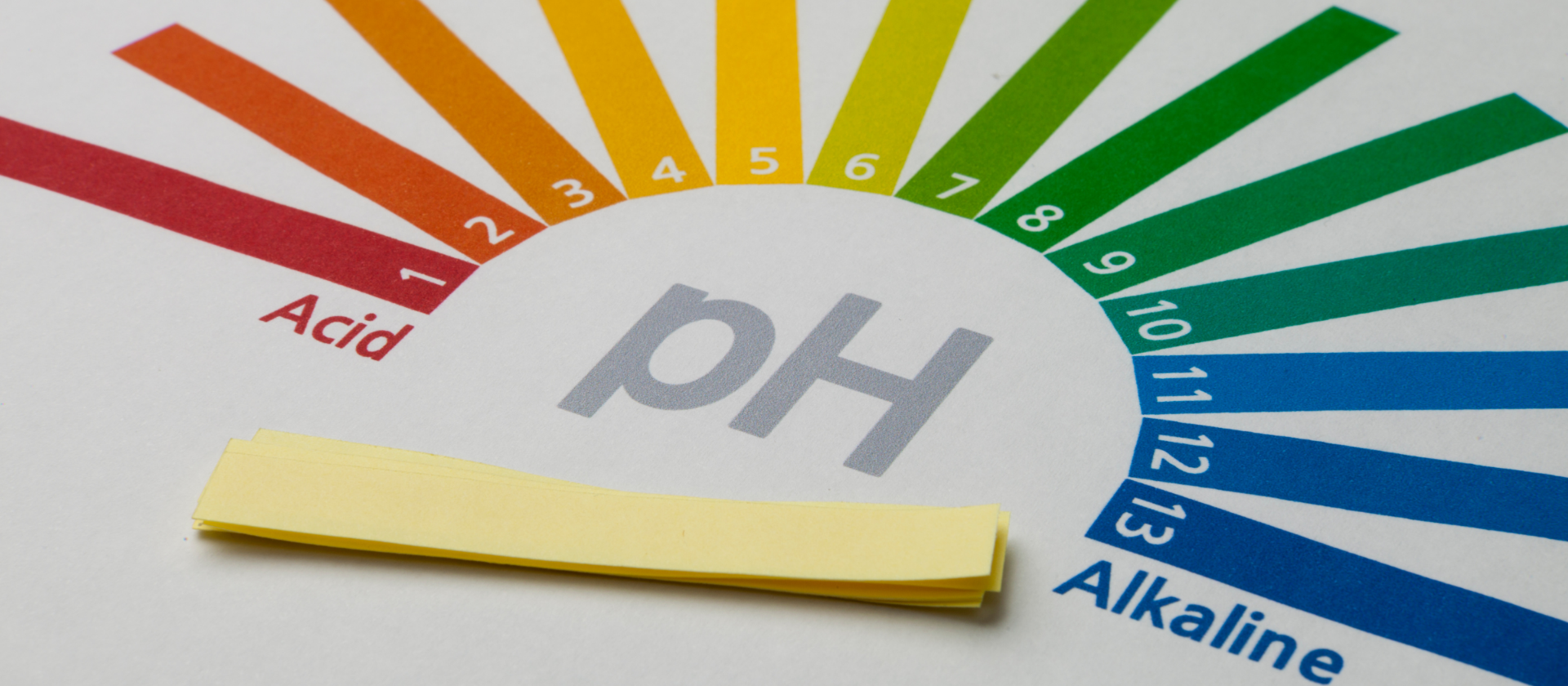
Acidity and alkalinity is determined by the "potential of hydrogen," or pH for short. More precisely, pH is a measure of the hydrogen ion concentration in an aqueous solution. Most chemical elements have a pH score on this scale that classifies them as acidic, basic (neutral), or alkaline. This includes chemical mixtures and compounds that contain hydrogen. For example, blood is considered basic, while vinegar is acidic. An aqueous form of ammonia is alkaline. These terms all correlate with a numerical value on the scale as a spectrum.
The Scale
The numeric scale suggests the following interpretation:
- pH 0 to pH 2 is strongly acidic
- pH 3 to pH 5 is weakly acidic
- pH 6 to pH 8 is neutral
- pH 9 to pH 11 is weakly alkaline
- pH 12 to pH 14 is strongly alkaline
It is important to note that because the scale is logarithmic, a change of one whole unit on the scale means the hydrogen ion concentration changes by a factor of ten.
For Example:
A reading of 4 has ten times the hydrogen ion concentration as a reading of 5 and 100 times the concentration of a value of 6 (10×10). Likewise, a value of 10 is 10 times more basic than a reading of 9. Pure water is neutral, but when mixed with chemicals, the solution may become acidic or basic: vinegar mixed with water will be acidic; washing detergents mixed with water will generally be basic.
Please Note:
When chemicals are very basic or very acidic, severe harm may occur to the skin or to the eyes, and caution must be exercised when handling these types of solutions.
Sources:
Water Science School, USGS.www.usgs.gov/.
Related Products