Key Features
Each unit offers distinct characteristics to accomplish these goals, with varying degrees of complexity.
Analog Vs. Digital
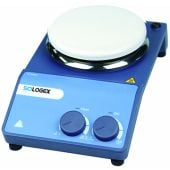
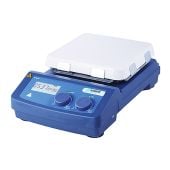
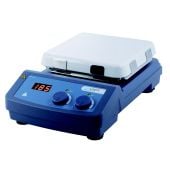
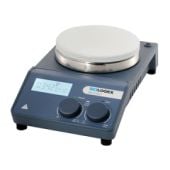
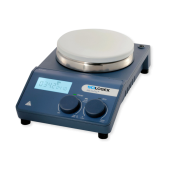
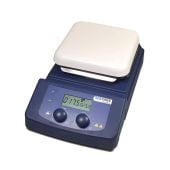
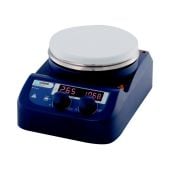
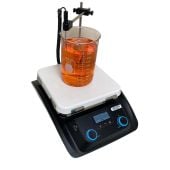
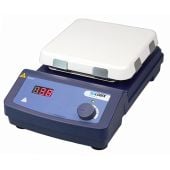
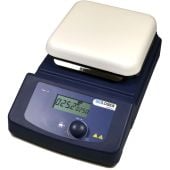
Incorporating knobs with marked gauges, analog controllers enable users to make fine adjustments to the desired temperature and speed settings. In contrast, digital controllers use either knobs or buttons for temperature and speed adjustments, displaying the exact measurements on a digital display. They may also be programmable, depending on the device.
However, each controller type comes with its own advantages and disadvantages.
| Analog Models |
Digital Models |
| Pros |
Cons |
Pros |
Cons |
| Simple design |
Less precision and control |
Higher precision and accuracy |
Larger learning curve due to complexity |
| Robust |
Lacks programmable settings |
Can come with programmable settings |
More expensive |
| Low cost |
May be difficult to reproduce settings |
Easy to replicate specific settings |
|
The advantages and disadvantages mentioned might not universally apply to all equipment and could exhibit variations.
Size and Capacity Load
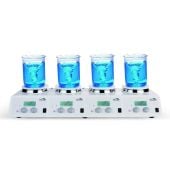
Hot plates and stirrers come in various sizes, from compact models designed for small-scale tasks to larger, industrial-sized units that simultaneously accommodate bigger containers or multiple vessels.
The same goes for hot plate stirrers, with some models capable of efficiently stirring large volumes of liquid or somewhat viscous liquids.
These devices' size and load capacity impact different applications or processes' heating efficiency and mixing. Overloading the plate can lead to uneven heating and ineffective stirring, compromising the results of your work. Always consult the product’s specification sheet or user manual before purchasing to ensure optimal performance and avoid these issues.
If you are working with larger volumes or viscous liquids and semi-liquids, read our article What Is The Difference Between Overhead and Magnetic Stirrers? to determine whether a hot plate stirrer or overhead stirrer will suffice for your application.
Temperature Range
When working with these pieces of lab equipment, it's critical to understand your application's temperature requirements. To ensure compatibility, always check each unit's temperature range. The vessel size, in conjunction with the temperature range, can influence the accuracy of your results.
In addition to the temperature range, how temperature is measured can significantly affect your application's results. The method used is based on an internal or external temperature controller.
Internal Vs. External Temperature Controllers
An internal temperature controller built into the unit measures only the temperature of the heating plate itself, not the contents within the vessel. While these controllers are reliable for general heating and stirring tasks, they may lead to temperature variations between the heating plate and the actual sample, especially in larger vessels or viscous substances.
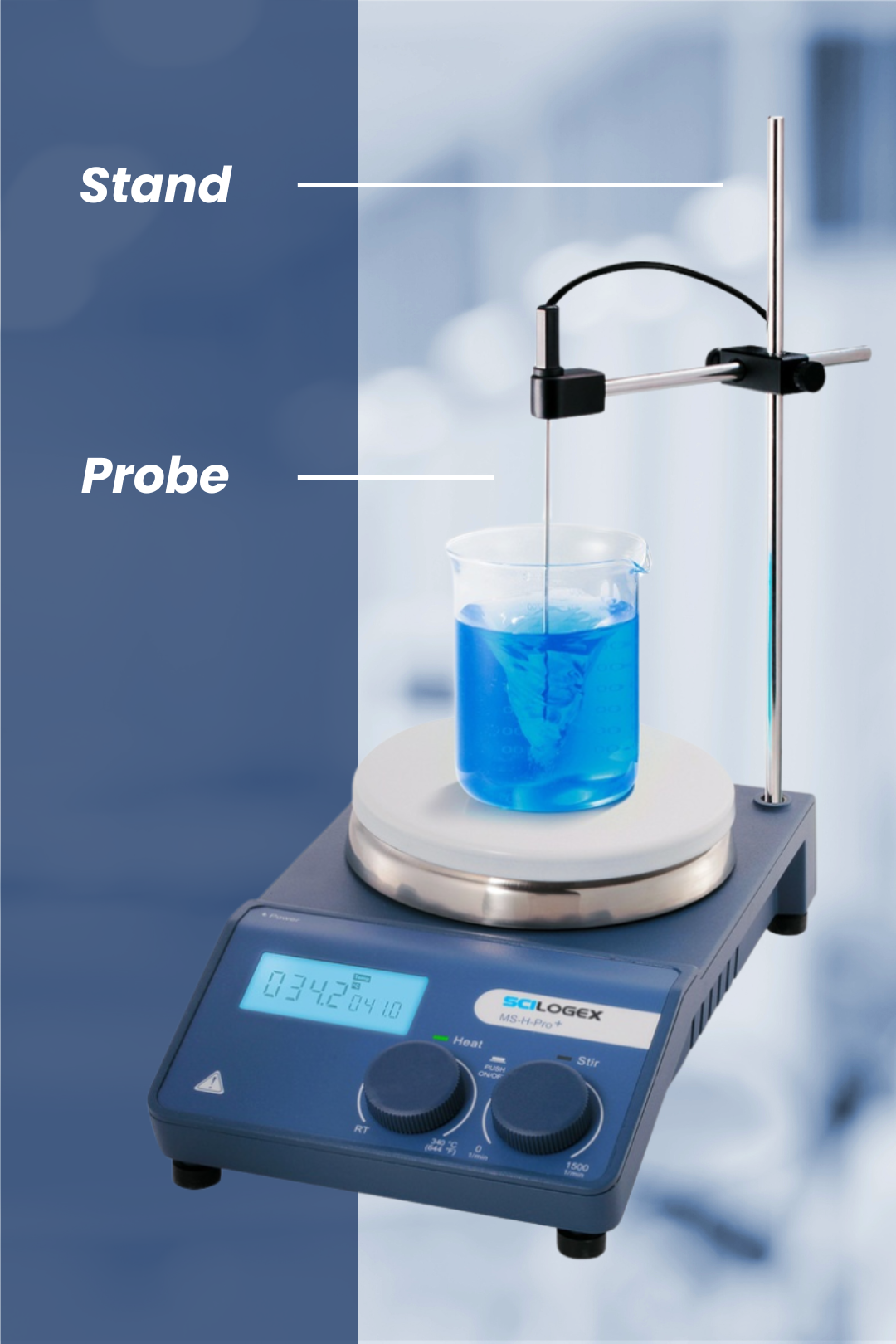
In contrast, a unit with an external temperature controller utilizes a probe submerged directly into the sample being heated and/or stirred. This direct measurement allows for more precise control over the sample’s temperature, reducing the likelihood of overheating or uneven heating. These units also reach the desired setpoint more quickly and maintain accurate temperatures.
External temperature controllers with submersible probes are especially advantageous in applications requiring long-term temperature stability or when working with temperature-sensitive materials such as proteins, enzymes, or volatile solvents.
While hot plates and stirrers with internal probes are more cost-effective and suitable for routine, less critical tasks, they are not recommended for applications where precise temperatures are crucial. External temperature controllers with submersible probes are the preferred choice for laboratories requiring high accuracy and reproducibility.
Chemical Resistance
When working with chemicals or corrosive materials, it is important to review the plate materials. Ceramic plates are recommended as they resist most acids, bases, and solvents. They are unlikely to corrode or degrade even when exposed to harsh chemicals at high temperatures. In addition to being chemically resistant, ceramic plates are resistant to scratches and wear, resulting in an extended life span for the device.
Aluminum plates, on the other hand, can heat up at a faster rate than ceramic plates. However, they tend to be predisposed to cosmetic damage and corrosion. They suit applications that require less aggressive materials and chemicals and are typically less costly.
Always check for chemical compatibility for further details, as exceptions may apply.
Safety Features
Many hot plates and hot plate stirrers have safety features to protect the user, the units, and heated materials. Here's an extensive overview that encapsulates the various safety features:
Hot surface indicators: Hot surface indicators: These indicators alert the user when the hot plate is turned on and heating up. They could be a simple warning label or a visual indicator, such as a light or digital display.
Visual and audible alarms: In case of an error or overheating, some units may be equipped with alarms to alert the user for swift action.
Overheating protection: To safeguard against overheating, these devices can shut off automatically to prevent potential or further damage.
Clamps: Clamps are highly recommended for magnetic stirrers. They hold the vessel firmly in place and prevent spillage, and they are indispensable when working with large volumes or viscous liquids.
Chemically resistant plates: Ceramic plates are chemically resistant to most acids, bases, and solvents, allowing them to be used in more hazardous applications.
Fuse or circuit breaker protection: Some units feature a fuse or circuit breaker protection mechanism to ensure future operation in case of excessive electricity consumption.
Power Requirements
Hot plates and hot plate stirrers have specific power requirements that must be met to function correctly. Therefore, knowing whether a power outlet can supply a unit with enough power is crucial. You can utilize the formula Wattage = Amperage x Voltage to distinguish the electrical demand of the device and whether the outlet will suffice. Here is an example:
The standard U.S. electrical outlet is designed to handle a current of 15 to 20A at a voltage of 120V. To determine the wattage capacity of a 15A outlet, simply multiply the amperage (15A) by the voltage (120V), which results in a maximum wattage of 1,800W (15A x 120V = 1,800W).
A hot plate you are considering has electrical information of 120V with 13.6A. Using the formula above, we can calculate the electrical demand: 120V x 13.6A = 1,632W. Because 1,632W is less than 1,800W, the device is compatible with that outlet.
Selecting the optimal laboratory heating and stirring devices is crucial to achieving exceptional application and experiment results. Whether you need a basic hot plate or a robust digital hot plate stirrer, this article helped you understand what to look for to meet your needs best. If you wish for further guidance, contact our expert sales team at 1-800-733-2522, [email protected], or message us via Live Chat, available on our website.