

What Is Chromatography? How It Works, Types & Industry Uses
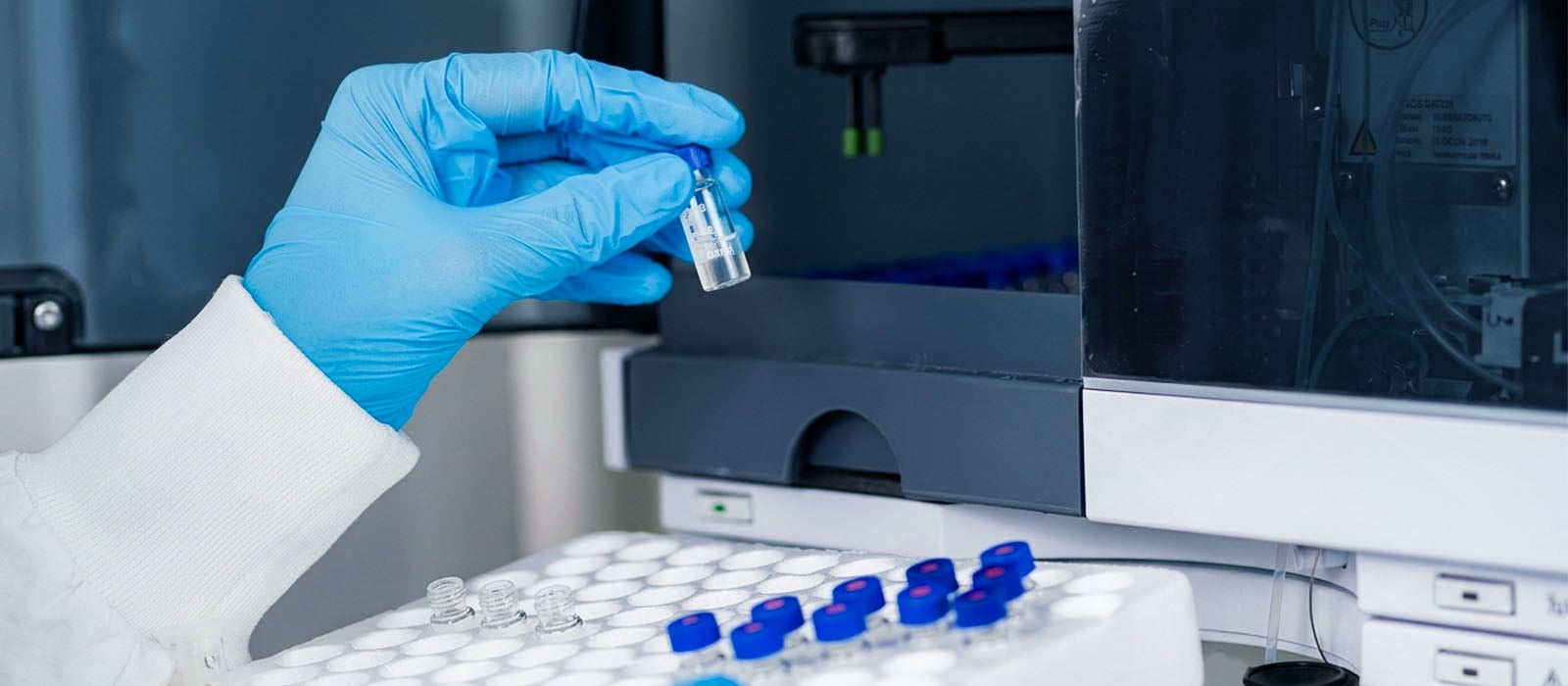
Learn what chromatography is, how a mobile phase and a stationary phase interact, and where these separation techniques are used today.
Chromatography is a laboratory technique that separates the individual components of a mixture so each one can be identified and measured. It originated in the early 1900s, when Russian botanist Mikhail Tsvet used it to separate plant pigments into visible colored bands on a strip of material.
The pigments are long gone from modern applications, but the main idea has not changed. Chromatography separates components using a mobile phase and a stationary phase, identifies each component, and calculates exactly how much of each is present, down to trace amounts most other methods tend to miss.
What Is the Core Principle Behind Chromatography?
The core principle of chromatography is that different substances travel at different speeds when passed through a system made of two phases. The stationary phase stays put. It might be a solid packed into a column, a thin layer of gel on a glass plate, or a strip of absorbent paper. The mobile phase, by contrast, is always in motion, either a gas or a liquid that carries the sample along with it.
As the mixture travels through the stationary phase, each component interacts with it differently. Some molecules cling to it and get held back. Others barely interact at all and race through with the mobile phase. Because every compound in a mixture has its own size, polarity, and chemical personality, each one moves at its own distinct pace. Given enough distance in a long enough column or plate, the compounds end up separated from one another, arriving at the far end or forming distinct bands at different times.
What Are the Main Types of Chromatography?
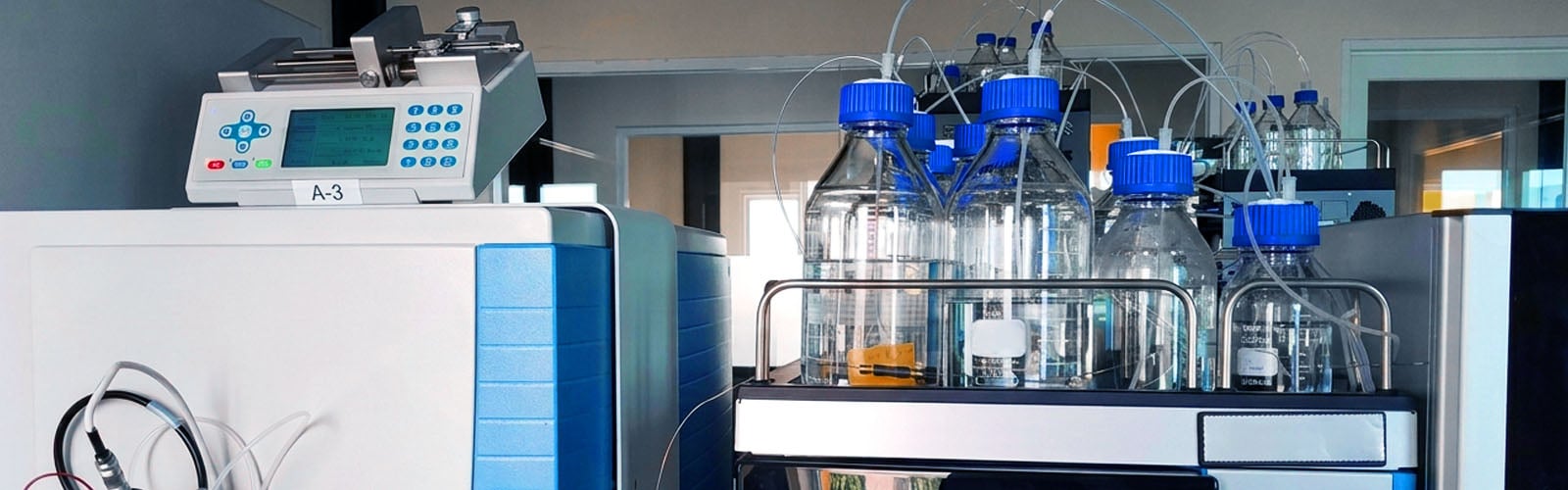
The main types of chromatography are gas chromatography, high-performance liquid chromatography, thin-layer chromatography, size-exclusion chromatography, ion-exchange chromatography, affinity chromatography, and paper chromatography. Each of them specializes in different kinds of samples and goals.
The two-phase principle stays constant across all of them, but the materials used for each phase and the physical setup of the system change depending on what samples are being separated and what the goal is.
Gas Chromatography
Gas chromatography separates chemical components using helium or nitrogen as the mobile phase. The inert gas pushes the vaporized sample into a narrow column coated with a stationary material, which slows down all chemical components it attracts. Components that stick less to the material continue to move until they exit the column, thereby separating the components you want to identify and measure.
High-Performance Liquid Chromatography
High-performance liquid chromatography, or HPLC, pushes a liquid solvent through a column under high pressure. This process separates compounds that tend to break down under the heat gas chromatography requires, making this technique vital in pharmaceutical testing and quality control.
The Lab Depot offers HPLC-grade Acetonitrile from Ricca Chemical Company. It is designed for liquid chromatography mobile phases and is available in 4 L amber glass bottles.
Thin-Layer Chromatography
Thin-layer chromatography, also referred to as TLC, uses two materials: a liquid solvent that serves as the mobile phase and a silica gel-coated plate that acts as the stationary phase. When the solvent is applied to the plate, it spreads outward, carrying the sample's components along at different speeds as it travels. It cannot match HPLC's precision, but it is inexpensive and fast, which is why it is still a go-to for a first-pass check in chemical or drug screening.
The Lab Depot features TLC sprayers from Chemglass Life Sciences. They utilize a Rodaviss® 24/40 joint and are available in 50 mL, 125 mL, and 250 mL capacities.
Ion-Exchange Chromatography
Ion-exchange chromatography sorts components by electrical charge instead of by size or polarity. Its stationary phase carries a charge of its own, so it grabs onto molecules with the opposite charge and holds them back. Neutral or similarly charged molecules pass right through.
Size-Exclusion Chromatography
Size, not chemical attraction, is what drives separation in size-exclusion chromatography. Small molecules wander into the pores of the stationary phase and take their time getting through. Larger ones simply cannot fit, so they bypass the pores altogether and exit first.
The Lab Depot carries PYREX® Chromatography Columns from Corning Life Sciences. These 10 mm x 300 mm columns have a coarse fritted disc and a PTFE product standard stopcock.
Affinity Chromatography
Affinity chromatography relies on a specific binding relationship between molecules, such as an enzyme and its substrate or an antibody and its antigen. Its stationary phase recognizes one particular molecule while letting the rest pass through.
The Lab Depot offers Chemglass Life Sciences' Flow-Control Adapters. They are available in 35/20, 50/30, and 75/50 spherical joint sizes and are compatible with the CG-1198 and CG-1199 chromatography columns, as well as the CG-1200 reservoir.
Paper Chromatography
Paper chromatography uses a liquid solvent as the mobile phase and an absorbent paper as the stationary phase. As the solvent creeps up the paper by capillary action, it dissolves the sample and pulls its components along at their own pace, spreading them out along the strip.
When Is Chromatography Used?
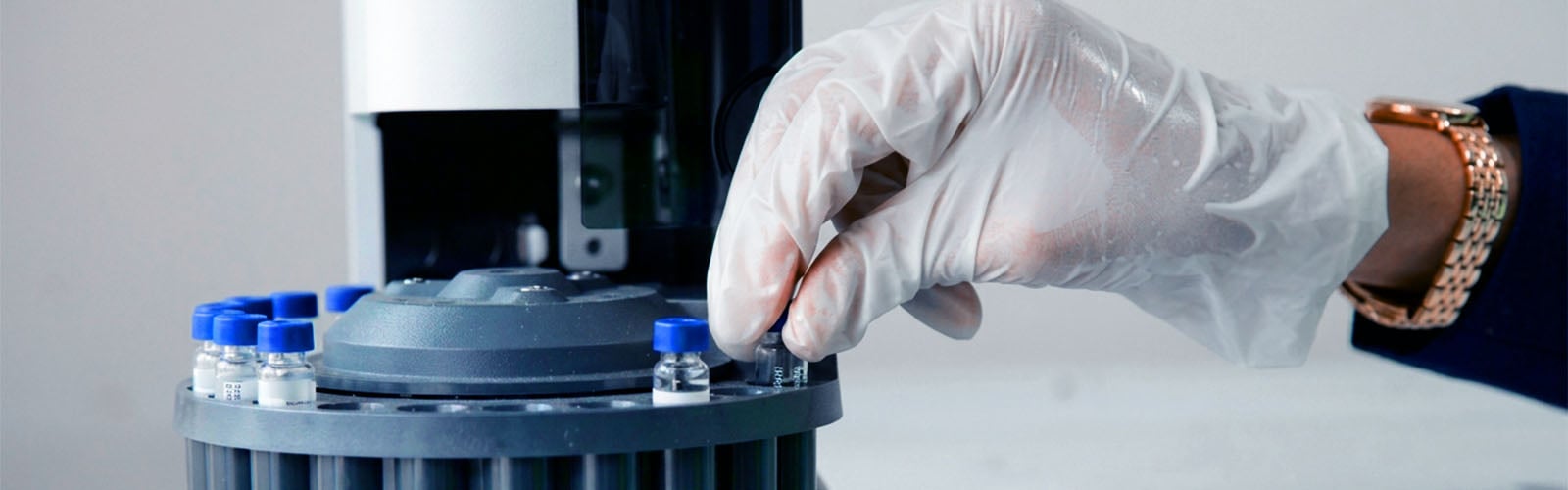
Chromatography is used across forensic science, environmental science, the food and beverage industry, pharmaceuticals, medical and scientific research, and security and sports. Its reach extends well beyond the research lab, playing a critical role in each of the industries below.
-
Forensic Science: Chromatography helps crime labs identify drugs, accelerants, gunshot residue, and toxins in biological samples.
-
Environmental Science: Testing air, soil, and water for pollutants and other harmful contaminants depends on chromatographic methods. They help regulators confirm whether a water source meets safety standards or trace contamination back to its source.
-
Food and Beverage Industry: From verifying that a bottle of olive oil is what the label claims, to detecting spoilage compounds, additives, or contaminants, chromatography helps ensure the food supply is safe and accurately labeled. It is also behind the flavor and aroma profiling that beverage companies use to keep products consistent batch after batch.
-
Pharmaceutical Industry: Drug manufacturers use chromatography at nearly every stage, such as confirming the purity of raw ingredients and verifying dosage accuracy. Regulatory approval for new medications almost always requires chromatographic data.
-
Medical and Scientific Research: Researchers use chromatography to study proteins, DNA, hormones, and metabolites, which makes it central to everything from diagnosing metabolic disorders to developing new therapies. It is also a key tool in genome and proteome research.
-
Security and Sports: Airport security also uses chromatographic detection methods to screen for explosives and narcotics. In athletics, anti-doping labs use the same principles to test for banned performance-enhancing substances.
What Chromatography Products Does The Lab Depot Offer?
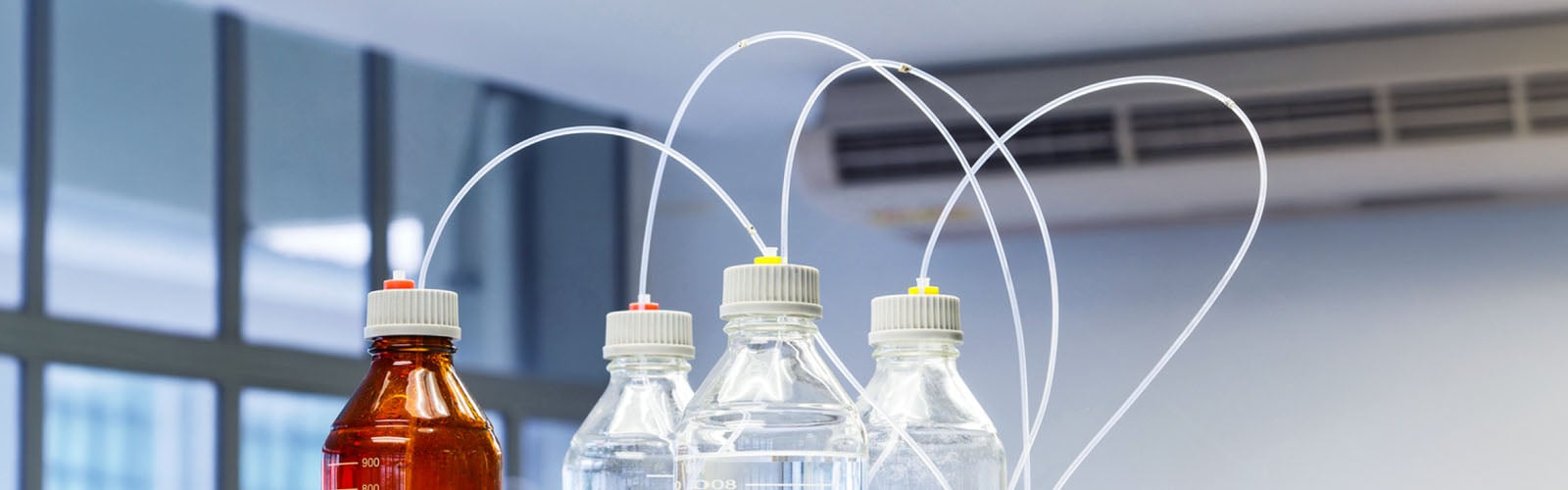
The Lab Depot stocks chromatography supplies, chemicals, glassware, and plasticware, covering every stage of a chromatography workflow, from filtering and injecting a sample to storing reagents and preparing the next run. Listed under each category are a few featured products we offer.
Supplies
Syringe filters, syringes, and tubing are some of the must-have supplies for chromatography. Syringe filters trap particulates before they reach the column, while syringes paired with inert tubing control how much sample and mobile phase move through it.
-
The Lab Depot offers both sterile and non-sterile PTFE Syringe Filters from CELLTREAT. They are available in clear or natural colors, as well as with a diameter of 13 mm, 30 mm, or 50 mm and a pore size of 0.22 µm or 0.45 µm.
-
The Lab Depot carries Trajan Scientific's SGE® General Purpose Gas Tight Fixed Needle Syringes, with volumes ranging from 10 µL to 500 µL.
-
The Lab Depot supplies 3/8 in Silcon® Silicone Tubing from New Age Industries. These tubes are 0.13 in thick and come in different lengths, from 6.25 ft to 400 ft.
Chemicals
GC- and HPLC-grade solvents reduce background noise and keep detectors free of contamination, while certified standards, reference points with known concentrations, make it possible to identify and quantify unknown samples accurately.
-
The Lab Depot has Silica Gel, Grade 60 from Spectrum Chemical Manufacturing. It is a granular and porous solid packaged in three bottle sizes: 100 g, 1 kg, and 5 kg.
-
The Lab Depot offers VeriSpec® Sodium (Na) Standards from Ricca Chemical Company, available in 100 mL, 250 mL, or 500 mL.
Glassware
Storing and preparing samples without introducing contamination calls for the right glassware, such as glass bottles, jointed glassware, and vials. Amber glass in particular protects light-sensitive reagents from photodegradation, while sealed vials keep prepared samples stable right up until injection.
-
The Lab Depot provides 2 mL R.A.M.™ Vials with a 9 mm Finish from JG Finneran. These vials are available in either clear or amber glass.
-
The Lab Depot carries United Scientific's Graduated Borosilicate Glass Storage Bottles with volumes ranging from 100 mL to 5 L.
-
The Lab Depot supplies Spherical Joint Chromatography Reservoirs from Chemglass Life Sciences. Choose from 100 mL to 2 L reservoirs designed for use with CG-1199 and CG-1200 columns.
-
The Lab Depot stocks VWR's 0.75 mL to 60 mL Disposable Culture Tubes. They are made of borosilicate glass and feature well-rounded bottoms.
Plasticware
Accurate liquid handling is important in chromatography, and that is only possible with quality pipettes and tips. At the same time, microplates and culture plates allow labs to process multiple samples simultaneously using automated systems to cut down on manual handling error.
-
The Lab Depot supplies MicroPette Universal Pipette Tips from SCILOGEX. These tips accommodate a wide range of volumes from 0.1 µL to 10000 µL and can be used with pipettors from other manufacturers.
-
The Lab Depot offers 96-Well Microtitration Plates from Globe Scientific, available in sterile and non-sterile options.
-
The Lab Depot features Kartell Screw Cap Polypropylene Test Tubes from Dynalon Products. These 15 mL tubes are available with red, blue, white, or yellow caps.
For a closer look at the essential chromatography supplies and consumables, read this blog.
Whatever your application, The Lab Depot carries the chromatography supplies you need. Contact our expert team by phone at 1-800-733-2522, by email, or through live chat on our website, and we'll help you find the right fit.