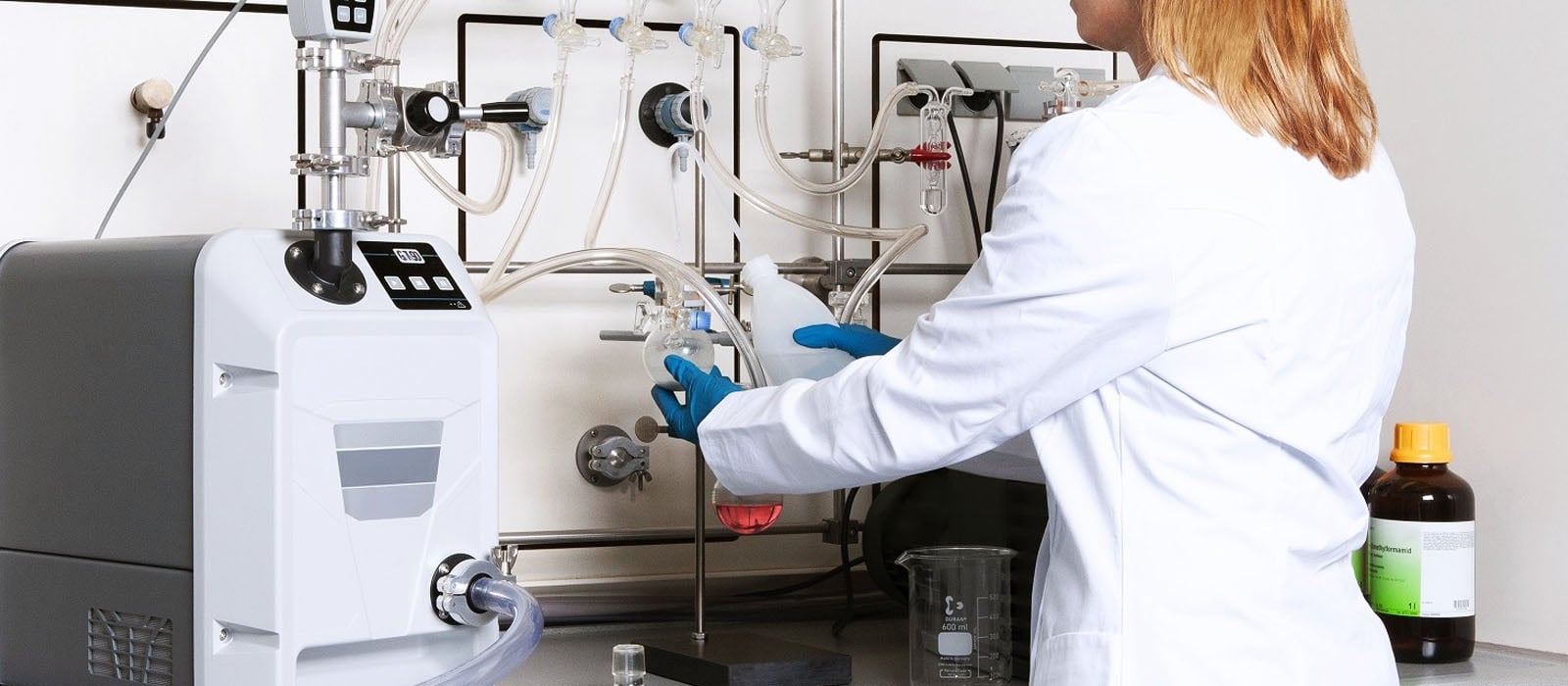
Explore the essential role of vacuum pumps in analytical testing, including their types, unique features, and critical applications across lab environments.
Vacuum pumps remove air and gases from a designated space to create a controlled vacuum environment. They allow researchers to work with sensitive samples without worrying about external contaminants or atmospheric pressure.
In analytical testing, vacuum pumps are most useful in preparing and analyzing samples. They are also utilized in chromatography, mass spectrometry, and other lab processes, making them indispensable even in complex applications.
Discover the importance of having a vacuum pump in an analytical lab as we unpack its different types, functions, and unique features. This article will help you understand why they are crucial to analytical testing.
Common Applications of Vacuum Pumps in Analytical Testing
From facilitating the smooth movement of ions to preserving temperature-sensitive samples, vacuum pumps are essential for applications that demand accuracy and control. Here is a list of applications for which they are most valuable.
Mass Spectrometry: Vacuum pumps create and maintain a low-pressure environment in the ion source and analyzer chambers, allowing ions to travel freely through the mass analyzer without colliding with air molecules. As a result, detection sensitivity and resolution are enhanced when analyzing complex mixtures.
Gas Chromatography: Contamination risks in gas chromatography are reduced using vacuum pumps. As pumps maintain the low pressure in the detector region, unwanted particles or residual gases are blocked, ensuring that only sample components pass through the column. This leads to more accurate separation and detection of volatile compounds.
Rotary Evaporation: The integrity and stability of heat-sensitive compounds during rotary evaporation is crucial. Vacuum pumps assist by reducing the boiling points of solvents for the safe removal of solvents at low temperatures.
Freeze Drying: Vacuum pumps for lyophilization provide the conditions required for sublimation, wherein ice bypasses the liquid phase and directly becomes vapor. As a result, the bioactivity and molecular structure of temperature-sensitive materials such as biological samples and pharmaceuticals are preserved.
Sample Degassing: Applying a vacuum removes dissolved gases from liquid samples, preventing bubbles or any interference in analytical techniques such as HPLC.
Electron Microscopy: Like mass spectrometry, vacuum pumps help electrons travel smoothly in transmission electron microscopy (TEM) or scanning electron microscopy (SEM) and yield high-resolution images. As they remove air from the sample chamber, they also reduce the likelihood of electron scattering by air molecules.
Vacuum Distillation: In vacuum distillation, vacuum pumps lower the ambient pressure, reducing compounds' boiling points. This ensures heat-sensitive materials undergo distillation without breaking down.
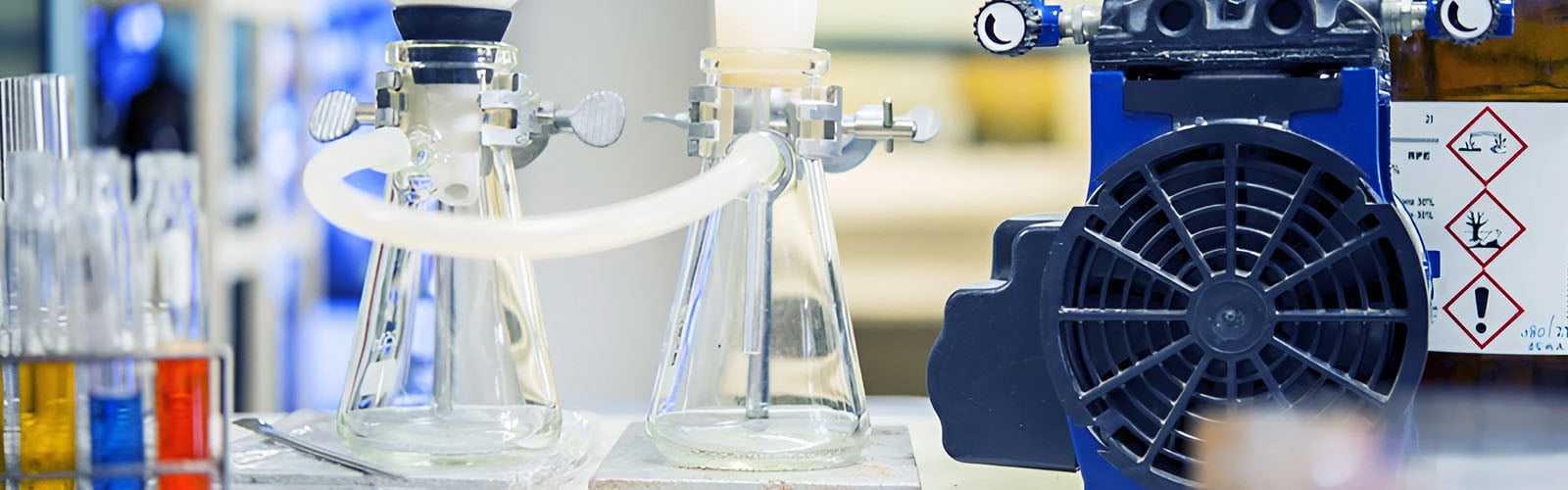
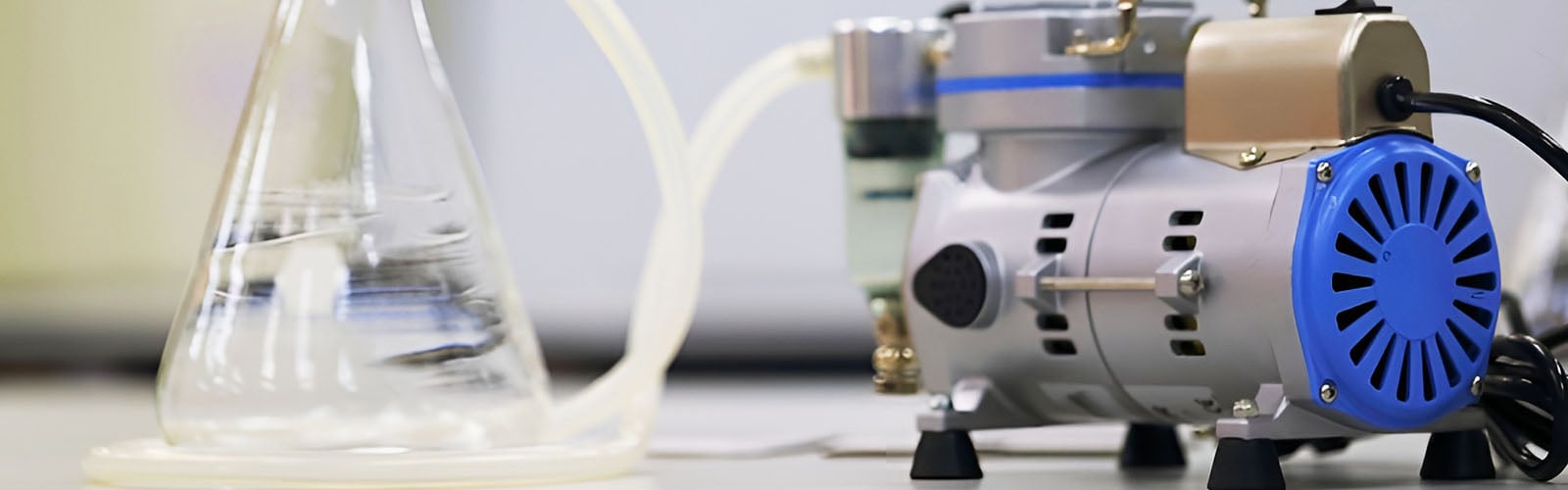
Vacuum Filtration: Besides creating low-pressure environments, vacuum pumps for vacuum filtration can also increase filtration speed and efficiency. They generate suction that draws liquids into the filter medium much faster, allowing for rapid separation of liquids and solids when preparing samples.
Gas Sampling: Vacuum pumps draw air or gas samples into collection chambers or through analytical instruments, which are useful for monitoring industrial and environmental gases.
Whether for freeze drying or gas chromatography, vacuum pumps must be indispensable. Their ability to establish low-pressure environments and provide the conditions needed by sensitive samples make them critical tools in modern analytical testing and a crucial part of new scientific discoveries.