

Muffle Furnace Buying Guide: 8 Factors for Choosing the Right Model
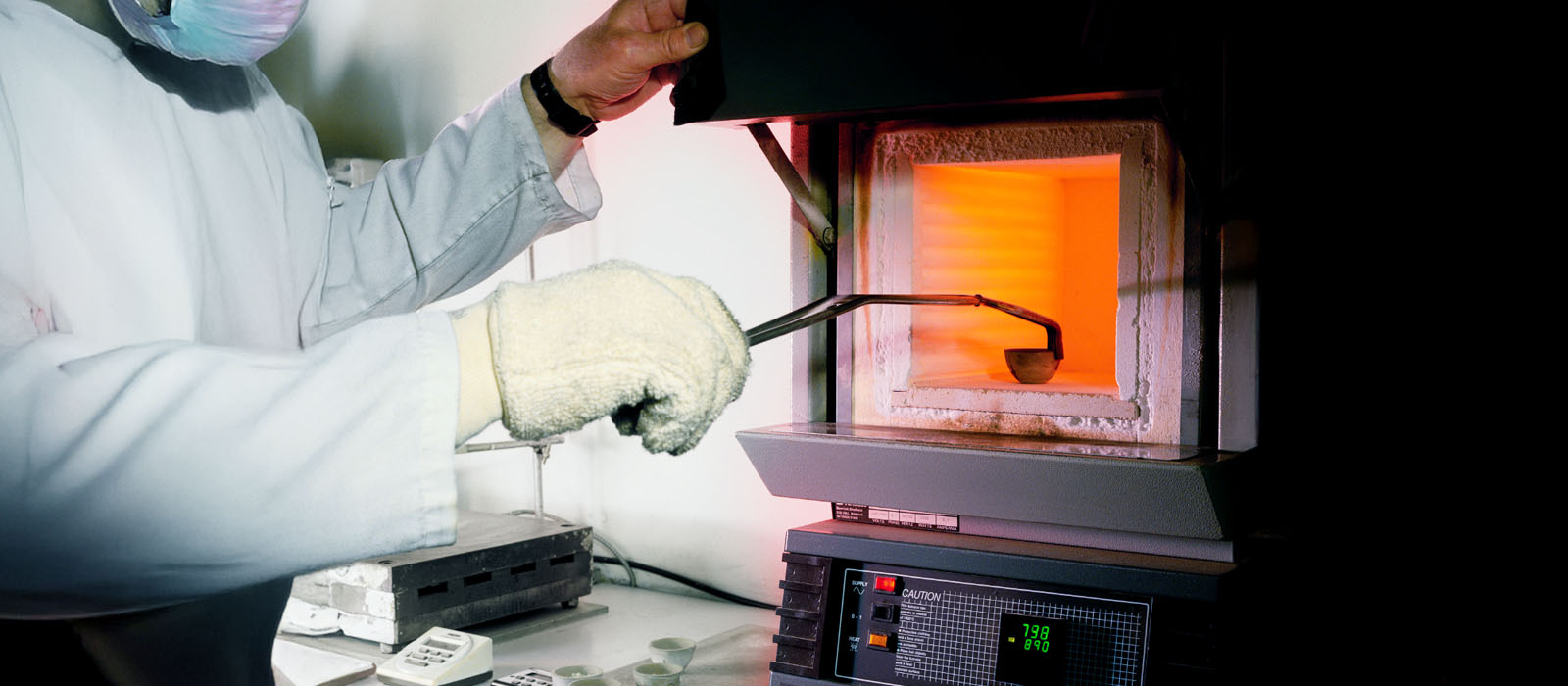
With many muffle furnaces available on the market, buying a new one may be daunting. However, with careful planning, research, and information from this guide, you can choose the best muffle furnace.
Muffle furnaces, or muffle ovens, are crucial for high-temperature heating such as ashing, soldering and brazing, glass fusing, heat treating, and environmental testing.
Compared to older muffle furnaces, modern models are energy-efficient and compact. They meet control standards for temperature uniformity and isolate heated samples from combustion materials or contaminants, ensuring the accuracy and effectiveness of research operations.
Newer models also include automation features such as programmable digital controllers or microprocessor-controlled thermoregulators. These features are perfect for intricate metallurgical and chemical applications, as well as for soaking, ramping, sintering, debinding, and end-to-end processes involving metal injection molding.
It's also worth noting that an electrical furnace uses heating elements, such as iron-chrome alloys with an insulated material acting as a muffle, which ultimately prevents heat from exiting the chamber. With energy produced through either blackbody radiation, convection, or conduction, these eliminate combustion byproducts commonly seen in non-electric muffle furnaces, making them highly valuable for laboratory use and research.
8 Factors to Consider When Buying a Muffle Furnace

When choosing a muffle furnace, it is crucial to consider the design specifications and requirements for your preferred production or application, including crucible and chamber sizes and input voltage. On the other hand, you can also choose a custom-built lab furnace for unique production and applications.
Below are the important variables to look at when selecting the right muffle furnace.
#1 Your Application
When choosing a lab muffle furnace, consider your intended application first. While numerous models can serve multiple lab operations, some processes and industries will require specific retort-based designs to successfully execute operations, especially for research that requires a wide temperature range. With an extremely heat-resistant internal ceramic and alumina fiber design, high-temperature furnaces are versatile and highly suitable for use in applications including:
- material research
- ceramics
- alloying
- fusion
- heat treatment
- metallurgy
- mining
- brazing
- reducing
- environmental testing
- glass formation
- nuclear fuel disposal
Considering your intended application will be a good head start in selecting the right muffle furnace.
#2 Working Temperature & Thermal Efficiency
Maximum operating temperature is a critical spec, but you must also consider the rise time or how quickly the unit reaches its peak, as well as its ability to maintain stability. Remember these two points:
- Always choose a furnace with a maximum rating roughly 20% higher than your intended application. If your process requires 1,000°C, a furnace rated for 1,200°C will offer better longevity and prevent premature failure of the heating elements.
- The type of thermocouple used dictates accuracy. While many standard ovens use S-type sensors, the Yamato FP Series utilizes R-type thermocouple sensors. These provide superior stability and precision at high temperatures, ensuring your research data remains reliable over long soak times.

#3 Samples
As mentioned previously, certain applications require specific design requirements. Lab muffle furnaces are widely used in various industries such as agricultural labs, steel and paint manufacturers, biotech companies, physics labs, pharmaceutics, and small industries, to name a few. Therefore, a variety of samples are employed in research and experiments.
For instance, tests on giant-molecule compounds such as rubber and plastics (polymers) require combustion of samples at around 900°C to 1400°C to determine the percentage of ash from the combustible material. When you go above or below this specific requirement, the furnace will either disintegrate the sample fully or risk contamination, which, in either case, can gravely affect the reliability of research.
With this in mind, it is only right that you also think about the subject material or samples you are about to work with when selecting a muffle furnace.

#4 Crucible Size
To determine the appropriate crucible size, always think of the sample dimensions. The type of crucible material will also depend on the furnace’s maximum temperature. For example, a Zirconia crucible works best at temperatures above 2100 °C.

#5 Input Voltage
Make sure to check the power source requirements on the label before settling on a product to see whether your lab can accommodate the energy demands. Yamato’s FP Series offers options for 115V and 220V. Either voltage will provide the same results.

#6 Chamber Size
To determine your required chamber size, it is important to remember that the constant-temperature zones are smaller than the chamber itself. Hence, select a muffle furnace with a constant-temperature zone larger than your subject material to achieve uniform heating.
Yamato offers chamber sizes ranging from 1.5 L to 30 L. It is also noteworthy that the FP Series Muffle Furnace features a heater that is not exposed to the inner chamber, preventing sample contamination.

#7 Advanced Insulation & Chamber Materials
The internal construction of a furnace determines its energy efficiency and its resistance to heat loss. Unlike their heavy, inefficient predecessors, lab furnaces today use advanced fiber-based insulation.
Ceramic Fiber Insulation
Upgrading to a ceramic muffle furnace provides a lightweight, energy-efficient solution. These materials are highly resistant to thermal shock and enable much faster heating and cooling cycles than traditional models.
Alumina Fiber Insulation
For applications up to 1,700°C, alumina fiber is the industry standard. It offers:
- Low thermal conductivity (keeping the exterior cool to the touch)
- Excellent wear resistance
- High electrical insulation to prevent interference with sensitive samples
Safety Tip: High-quality insulation is also a safety feature. A superior fiber blanket keeps the furnace's outer shell at a safe temperature, protecting lab personnel from accidental burns

#8 Safety Features
Choose lab furnaces with safety features to reduce risks of accidents and injuries at work and prevent moisture reuptake during thermal treatment processes. Look for models with self-diagnostic functions, auto-recovery features (especially after a power failure), calibration offset, key lock function, an automatic and independent overheat prevention device, and an earth leakage breaker.
Likewise, self-diagnostic functions will ensure mechanical stability and include sensor error, memory error, SSR short circuits, triac short circuits, heater disconnection, automatic overheat prevention, and main relay failure disconnection. However, both safety and self-diagnostic functions may vary per model.
Why Choose Yamato Scientific?
With 130 years of quality service, Yamato Scientific America continues to provide state-of-the-art products to the research and scientific innovation community. We guarantee that all equipment is manufactured in strict compliance with industry quality standards and international regulatory requirements.
Ready to upgrade your thermal processing? Explore our full range of Muffle Furnaces or contact our specialists today for a custom configuration.