

How to Clean Lab Glassware for Trace Metal Analysis
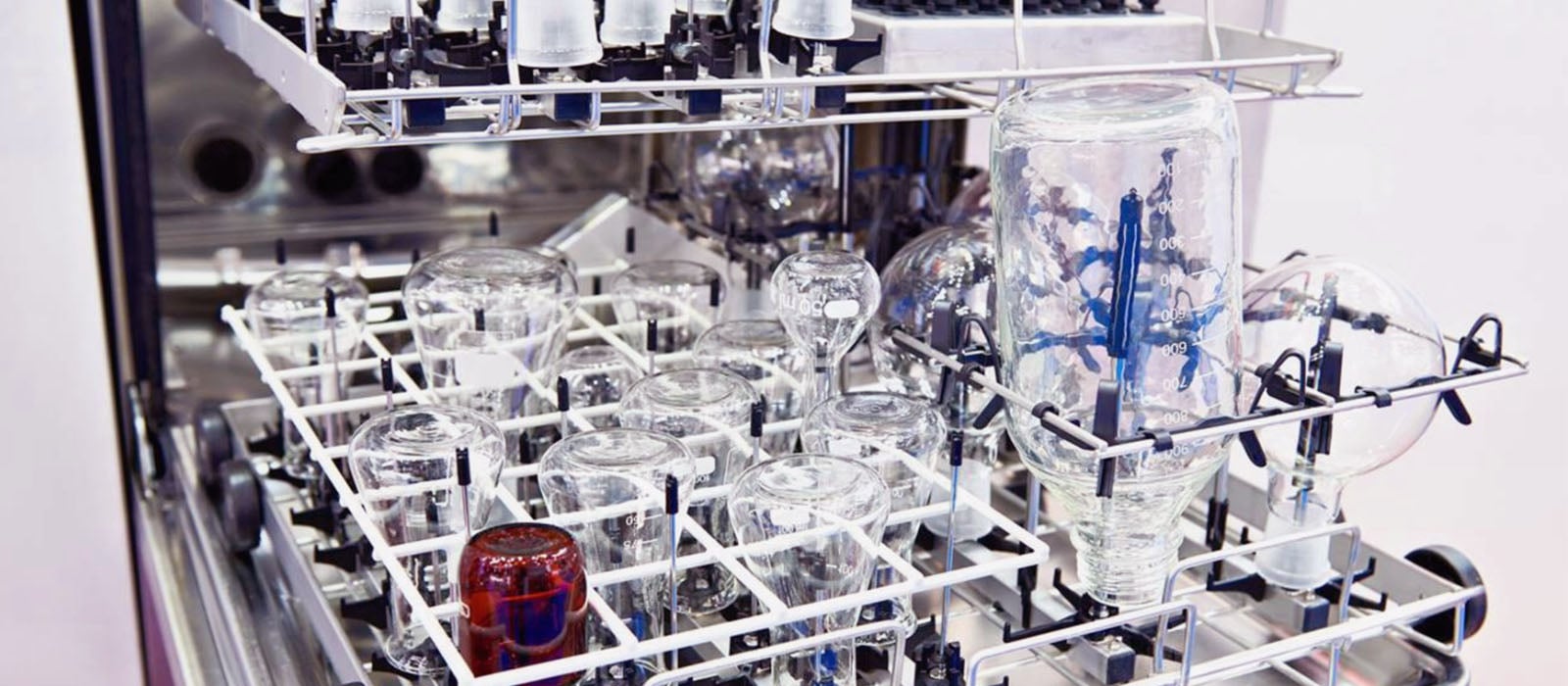
Your glassware may be adding metals to your samples. Learn how to wash, acid soak, rinse, and store laboratory glassware to remove residue and prevent cross-contamination.
At trace levels, the glassware you use can affect your results as much as the instrument does. When you’re measuring metals in the parts-per-billion or parts-per-trillion range, a thin film of detergent, a fingerprint, or a few specks of dust can add enough signal to skew a result.
Ensuring the glass vessels you use are clean is the key. Both Method 200.8 and Method 1669 of the U.S. Environmental Protection Agency (EPA) require all glassware to be cleaned using the acid wash method. More importantly, the acid you use must be trace-metal-grade, and chromic acid must be avoided when cleaning glassware.
Step-by-Step Glassware Cleaning Procedure
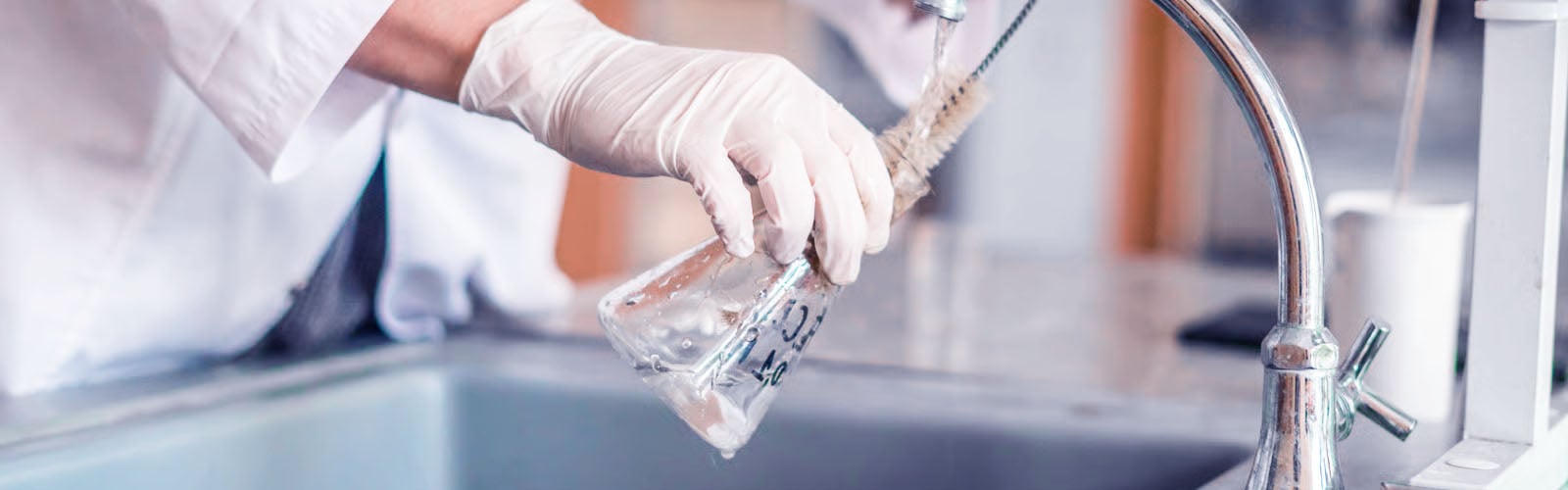
Follow these steps to effectively decontaminate your beakers, sample bottles, Erlenmeyer flasks, or other glassware used in trace metal analysis:
-
Remove residue during pre-rinse. If you delay rinsing your vessels after use, residue will dry up on the surface. You can either rinse them three times with warm tap water or with the last solvent used in the vessel, as recommended by the EPA’s organic methods. Using the latter dissolves residues that water alone will not remove.
-
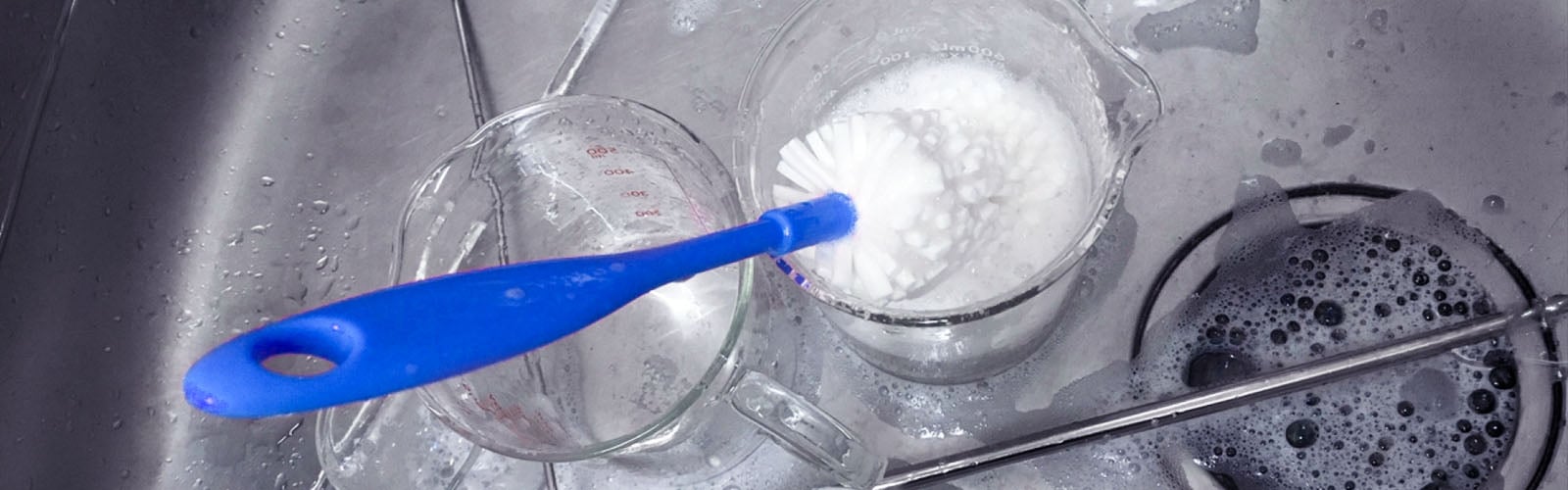
Wash them with laboratory detergent. Scrub the vessels inside and out with warm water mixed with Liquinox or another lab detergent using a non-metal-cored brush. Start with a 0.1% to 0.2% detergent solution and build up to 2% for tougher dirt.
-
Rinse them with tap water. After rinsing them three times, rinse them again with deionized water. Soap residues mixed with nitric acid (HNO3) and hydrochloric acid (HCl) leave a hydrophobic film that will prevent concentrated acids from reaching the glass.
-
Prepare the first acid bath soak inside a chemical fume hood. Slowly add a 10% (v/v) solution of trace-metal-grade HNO3 into a PTFE soaking tank filled with Type I or deionized water.
-
Soak the pre-cleaned glassware in the HNO3 bath for 24 hours. Use PTFE-coated or acid-resistant polypropylene tongs to carefully submerge the vessels in the bath, tilting them to remove any trapped air. Leave them soaked at room temperature.
NOTE: Follow these tips during this step:-
Use a weaker 2% HNO3 solution for an extended soak of up to 48 hours.
-
Avoid very long soaks using high acid concentrations to prevent glass from etching.
-
Always use ANSI-approved splash goggles under a full face shield, heavy-duty neoprene or thick butyl/nitrile chemical gloves, a lab coat, and an acid-resistant rubber or PVC apron.
-
-
Rinse the vessels thoroughly with deionized water. After soaking, use the same tongs to remove the vessels. Rinse them, and ensure that no traces of HNO3 are left on the glassware after the first soak.
-
Soak the rinsed glassware in the HCL bath for 12 hours. To prepare the bath, follow the same steps and safety precautions in Step #4, but replace HNO3 with HCl.
-
Rinse them with Type 1 ultrapure water at least three times. Use dedicated, acid-washed plastic tongs to lift the vessels, and let them drain for up to 15 seconds to reduce reagent carry-over. Rinse their interior and exterior using a squirt bottle reserved for Type 1 water (18.2 MΩ⋅cm resistivity at 25℃) only. Ensure the bottle tip never touches the glassware.
-
Check the baseline pH and conductivity of the final rinse water. Using non-bleeding pH indicator strips or a conductivity meter, ensure that the readings match the said water quality parameters of your fresh Type 1 water.
-
Dry without adding anything. Place the acid-washed glassware upside down on clean polyethylene or polypropylene drying racks and the small items in plastic mesh baskets. Keep these racks and baskets inside a Class 100 laminar flow clean bench or a filtered drying cabinet. Never use paper towels or Kimwipes to dry the glassware.
-
Seal all openings with acid-washed PTFE or polyethylene stoppers. Clean, metal-free laboratory sealing films can also be used. However, avoid using standard rubber stoppers.
-
Store the sealed glassware in polypropylene bags or zip-top polyethylene bags. Ensure that the cabinets are dust-free and the bags are clean. Keep them away from general chemistry glassware and away from open acid digestion hoods.
Common Decontamination Mistakes You Should Avoid
Even small mistakes while acid washing glassware can lead to contamination. Here are some common pitfalls and how to avoid them.
| Mistakes | Reasons | Correct Actions |
|---|---|---|
| Using chromic acid | Chromic acid can leave metals on the glass, and is therefore prohibited by EPA Method 200.8 for cleaning glassware | Use a 10% trace-metal-grade nitric or hydrochloric acid soak |
| Using reagent-grade acid | Standard reagent grades can contain metals that interfere at trace concentrations (EPA Method 1669) | Use trace-metal-grade acids for baths and rinses |
| Leaving soap residue before the acid soak | Detergent leaves a hydrophobic film that keeps the acid from reaching the glass | Rinse thoroughly with tap water, then deionized water, before the acid bath |
| Using tap water as the final rinse | Tap water adds dissolved metals and minerals | Finish with at least three rinses of Type I ultrapure water |
| Reusing rinse water or skipping rinse cycles | Acid and detergent traces stay on the glass | Use fresh water for every pass and complete the full rinse count |
| Running an acid bath past its useful life | A depleted bath can add metals back instead of removing them | Replace it on a schedule, and sooner if your blanks start to drift |
| Mixing cleaned and uncleaned glassware | One dirty piece can recontaminate the whole bench | Store cleaned glassware separately, sealed and dated |
| Touching inner surfaces, caps, or stoppers | Skin, dust, and unclean liners add contamination | Wear clean gloves, use acid-washed tongs, and seal with PTFE or PE stoppers |
| Drying with paper towels or Kimwipes | Lint and rubber can leave particles and trace metals behind | Air-dry inverted on a clean PE or PP rack in a dust-free space |
| Skipping the final pH or conductivity check | Traces of acid or detergents in the last rinse | Compare the final rinse against your fresh Type 1 water before drying |
Looking for high-quality laboratory glassware for trace metal analysis and other environmental testing applications? At The Lab Depot, we offer flasks, storage vessels, vials, and more, all from reliable brands and manufacturers. If you have questions, please contact our expert team at 1-800-733-2522, email, or via live chat on our website.
Sources:
https://www.epa.gov/sites/default/files/2015-06/documents/epa-200.8.pdf
https://19january2021snapshot.epa.gov/sites/static/files/2015-10/documents/method_1669_1996.pdf
https://www.mt.com/us/en/home/applications/Laboratory_weighing/trace-metal-analysis.html
https://www.intertek.com/chemicals/trace-metals-analysis/
http://english.nieer.cas.cn/rh/rp/201106/t20110612_71106.html
https://pmc.ncbi.nlm.nih.gov/articles/PMC12177168/
https://www.youtube.com/watch?v=rHH2n2qJgME&t=15s
https://casrai.org/guides/type-1-water-laboratory-water-grades