

Essential FAQs When Buying a Welch Vacuum Pump
Explore the key questions you need to ask to help you make the best decision when choosing a Welch vacuum pump for your lab.
Welch is a highly regarded manufacturer of vacuum pumps and systems designed for laboratory and industrial applications. It offers various pumps, including scroll, rotary vane, oil-diffusion, piston, and diaphragm pumps. In addition, it manufactures vacuum blower systems and fluid aspiration systems.
With a vast selection, finding the most suitable model can be tricky. You must understand its features and capabilities and its maintenance requirements. This guide provides helpful answers to the most commonly asked questions when purchasing a Welch vacuum pump to support your applications and enhance your research.
Welch Vacuum Pump Buyer FAQs
What is your sample size?
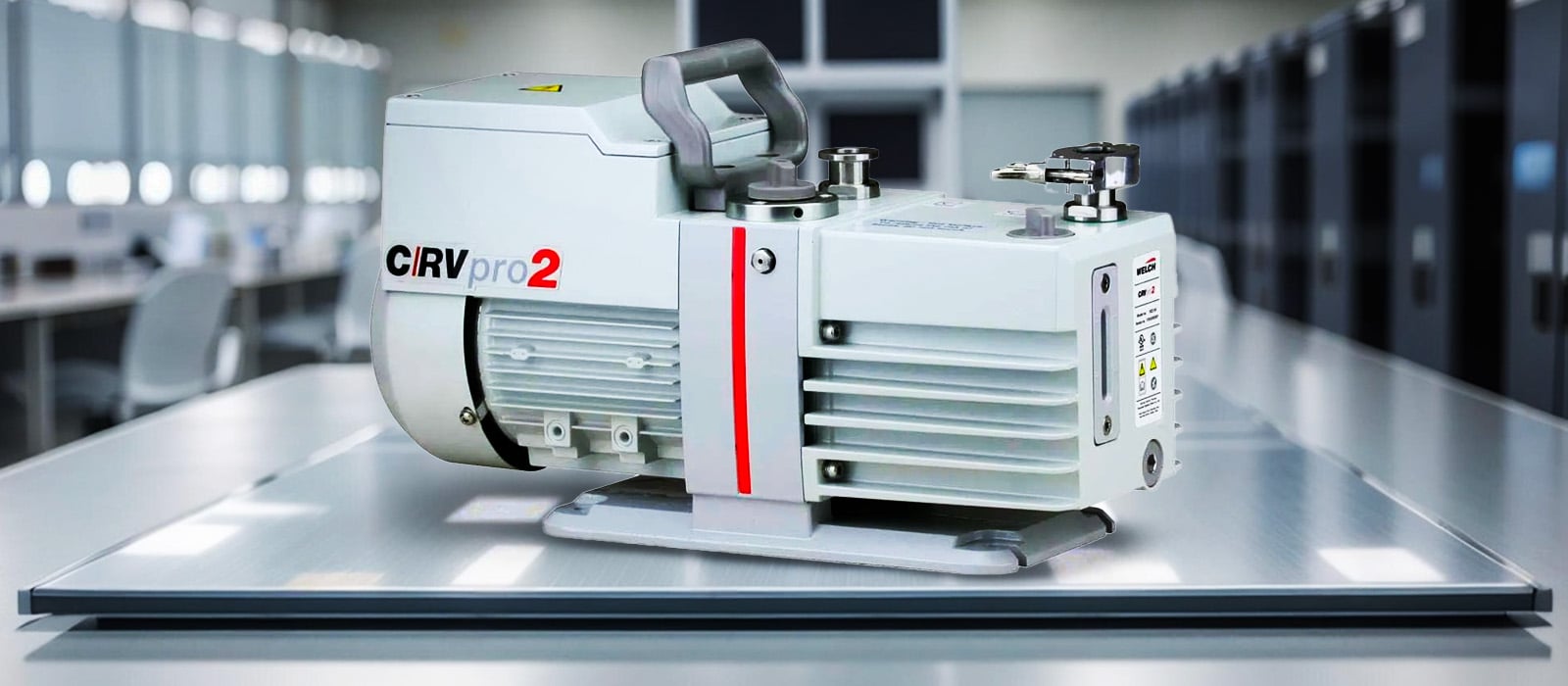
The volume of your sample matters because it determines the required flow rate of the vacuum pump. When working with larger samples, ensure the pump has a higher flow rate. This way, it can achieve and maintain efficient processing times. A great choice when dealing with larger samples is the CRVpro Direct Drive rotary vane pump. On the other hand, smaller samples will work well even with pumps that have lower flow rates.
What kind of chemistry is involved in the application/sample?
The rule that your lab equipment should handle your sample's chemical composition also applies to vacuum pumps. Applications that involve corrosive chemicals, such as acidic solutions or organic solvents, require a chemically resistant pump. Models with components coated with polytetrafluoroethylene (PTFE) are perfect for those applications since this fluoropolymer is chemically inert. The ChemStar models would be a wise choice. Otherwise, general-use pumps are an excellent and cost-effective option.
Where will the vacuum be placed inside the lab?
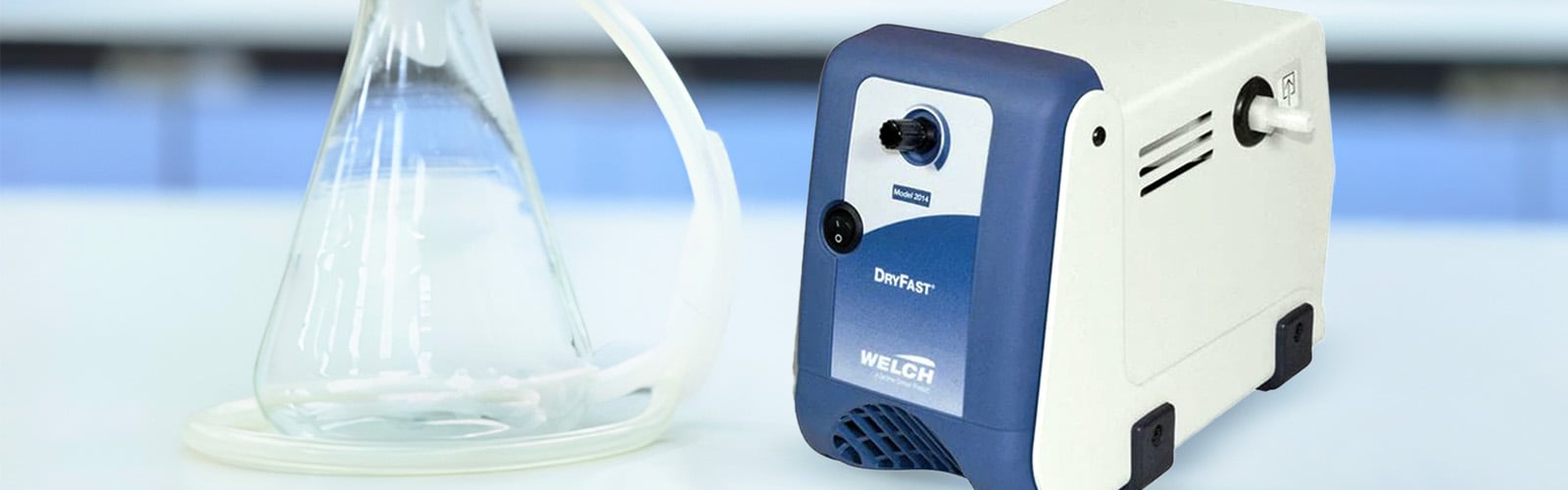
Noise level, size, and portability go hand in hand with the pump's intended location. Large lab setups can accommodate standalone models that provide a more powerful performance. In confined or noise-sensitive environments, compact and ultra-quiet pumps are recommended. Opting for smaller units allows you to fit them in tight spaces or on benchtops, but remember to ensure adequate ventilation to prevent them from overheating. An oil-free DryFast diaphragm pump is recommended for confined spaces since it requires less maintenance and operates quietly.
What is the required vacuum level?
The required vacuum level varies across applications. For example, rotary evaporation and freeze-drying demand deeper vacuums to achieve proper solvent removal or sublimation, whereas filtration tasks typically operate effectively with a rough vacuum. Choosing a pump with the appropriate vacuum level improves your workflow and minimizes the risk of underperforming or overloading. For instance, DuoSeal rotary vane pumps are suitable for deep vacuum applications, whereas WOB-L piston pumps are great for everyday lab vacuum tasks.
Is your sample sensitive to oil?
Using oil-free vacuum pumps is a must when working on applications involving oil-sensitive samples. Otherwise, contamination can persist. Among the different Welch vacuum pumps available, diaphragm pumps, such as the DryFast Collegiate diaphragm pump, are an ideal choice. They are oil-free and designed to provide clean vacuum conditions required by sensitive applications.
Explore various vacuum pumps from trustworthy manufacturers at TLD! If you have product concerns, our expert sales team is ready to help. Contact us at 1-800-733-2522, by email, or through the live chat feature on our website.