

Why an Evidence Drying Cabinet is Vital for Forensic Analysis
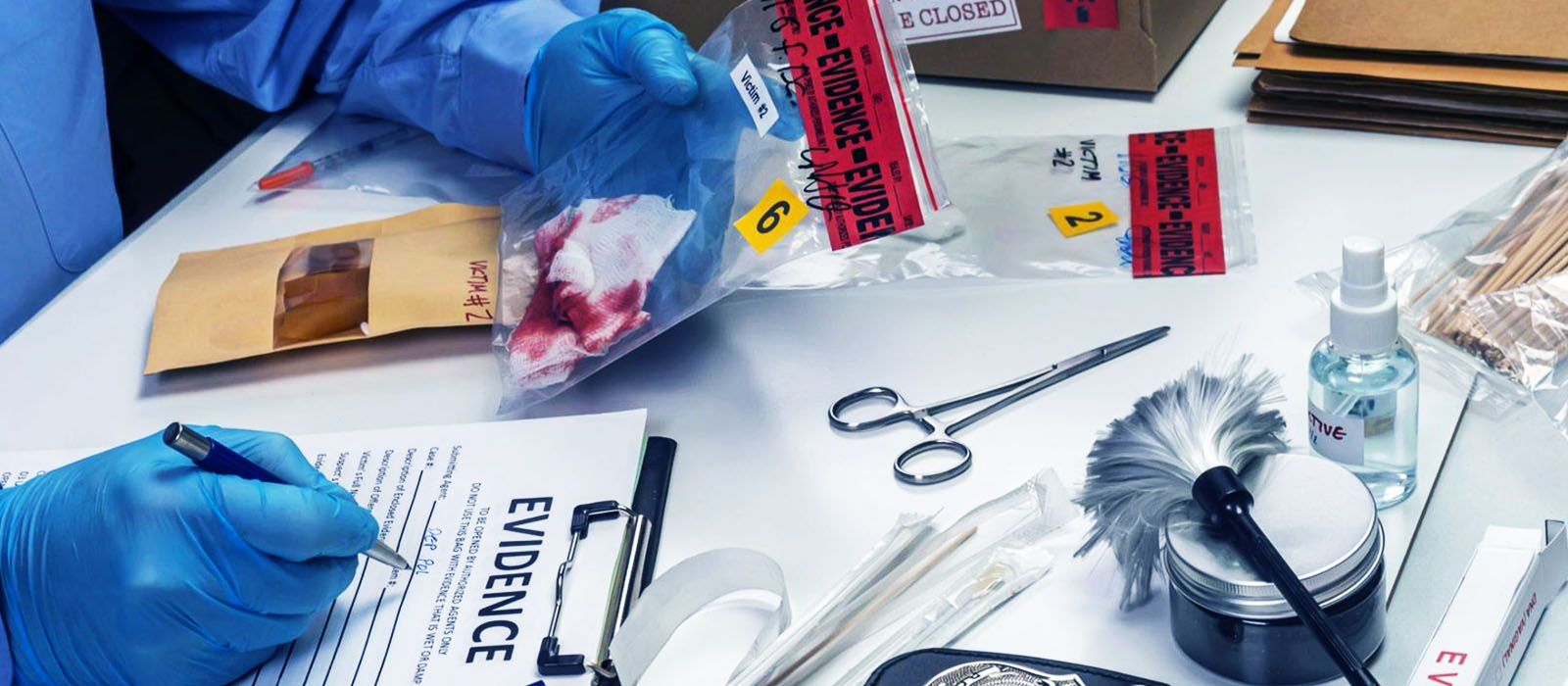
Protect the chain of custody with a quality forensic evidence drying cabinet, and ensure your forensic investigation remains untainted by cross-contamination.
In forensic science, the "clock" is your greatest enemy. If you have ever walked into a processing room after a major crime scene call-out on a humid weekend, you know the smell. But for a lab manager, that odor isn't just a nuisance—it’s the sound of evidence disappearing.
Biological materials are volatile. When evidence remains wet, bacteria and mold can destroy viable DNA profiles in a matter of hours. Conversely, if evidence is dried too aggressively or in an uncontained space, you risk the nightmare of cross-contamination.
This is where the evidence drying cabinet stops being just a metal box and starts being a critical line of defense. For lab managers, selecting the right unit isn't about buying furniture; it's about mitigating risk across the entire forensic investigation.
What is an Evidence Drying Cabinet?
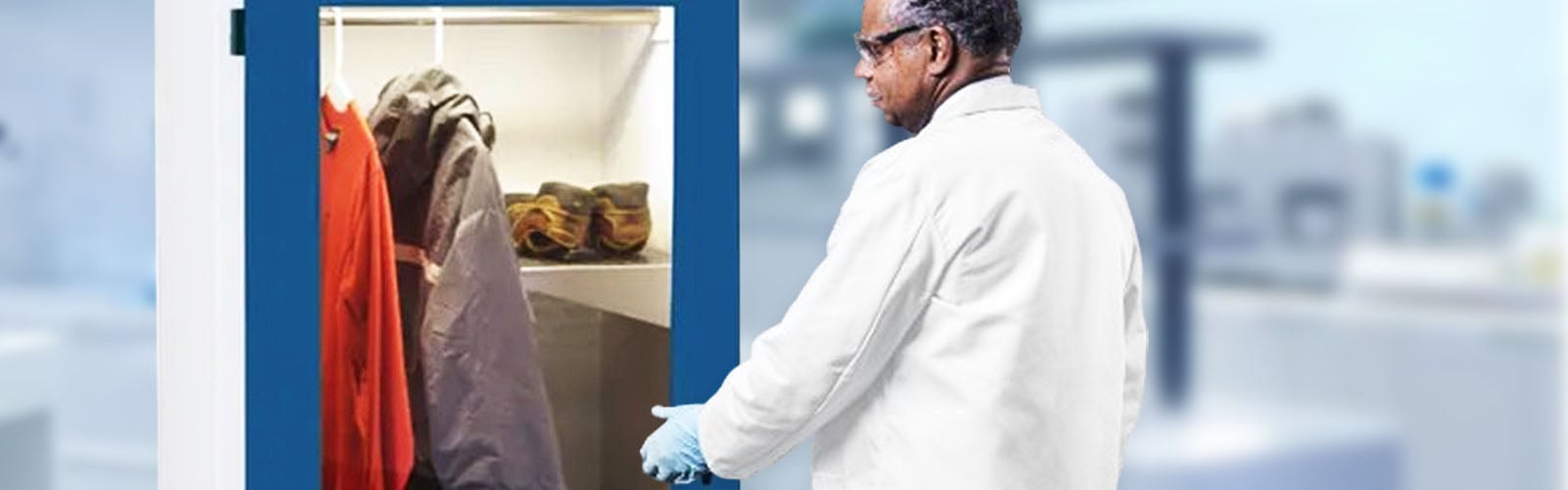
A drying cabinet is designed to accelerate drying while containing biohazards. However, the difference between a standard industrial dryer and specialized forensic lab equipment lies in the airflow dynamics, categorized into three critical functions:
Negative Pressure
These cabinets operate under constant negative pressure. Even if a door seal is slightly compromised or a technician opens the unit, air flows into the cabinet rather than blowing out. This ensures that foul odors, airborne pathogens, and biohazardous particulates stay inside the system.
Dual Filtration
Ductless drying cabinets use two-stage filtration. Before the intake air touches the evidence, it passes through a pre-filter to remove environmental contaminants such as dust, hair, and pollen. This prevents contaminants from settling on the evidence. Then, before recirculating, whether it re-enters the room or leaves the building, the exhaust air goes through HEPA and activated carbon filters.
Contamination Control
In modern forensic analysis, the sensitivity of DNA profiling has skyrocketed. We can now generate profiles from touch DNA, which makes the risk of transfer inside the drying chamber a massive liability.
Effective evidence drying cabinets prevent this by incorporating distinct design choices, such as:
- Multi-Chamber Designs: Multi-chamber units allow different cases to dry simultaneously without sharing the same airspace.
- Medical-Grade Materials: The interior must be resistant to harsh disinfectants. Medical-grade stainless steel or chemical-resistant polymers are standard because they can withstand the bleach solutions required to destroy DNA between uses.
- Trace Evidence Traps: Capturing lint and hair at intake prevents trace materials from blowing from one garment onto another.
Chain of Custody and Physical Security
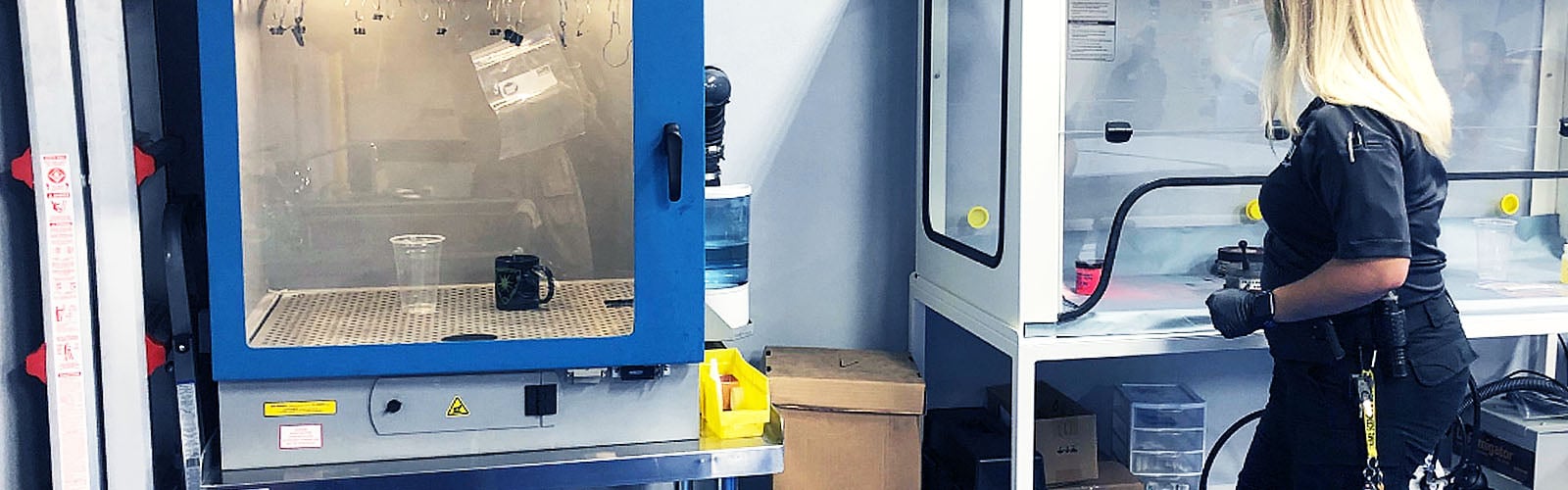
A defense attorney's first target is often the chain of custody. If forensic investigations rely on evidence that sat in an unlocked or unmonitored drying cabinet, the integrity of that evidence is debatable.
Modern cabinets are evolving to address this. We are seeing a shift toward keyless entry systems with RFID logging, which automatically records exactly who opened the cabinet and when. Some units even log airflow data and drying duration, providing a digital paper trail that proves the evidence was stored in a controlled environment throughout the drying process.
Selecting Forensic Evidence Drying Cabinets
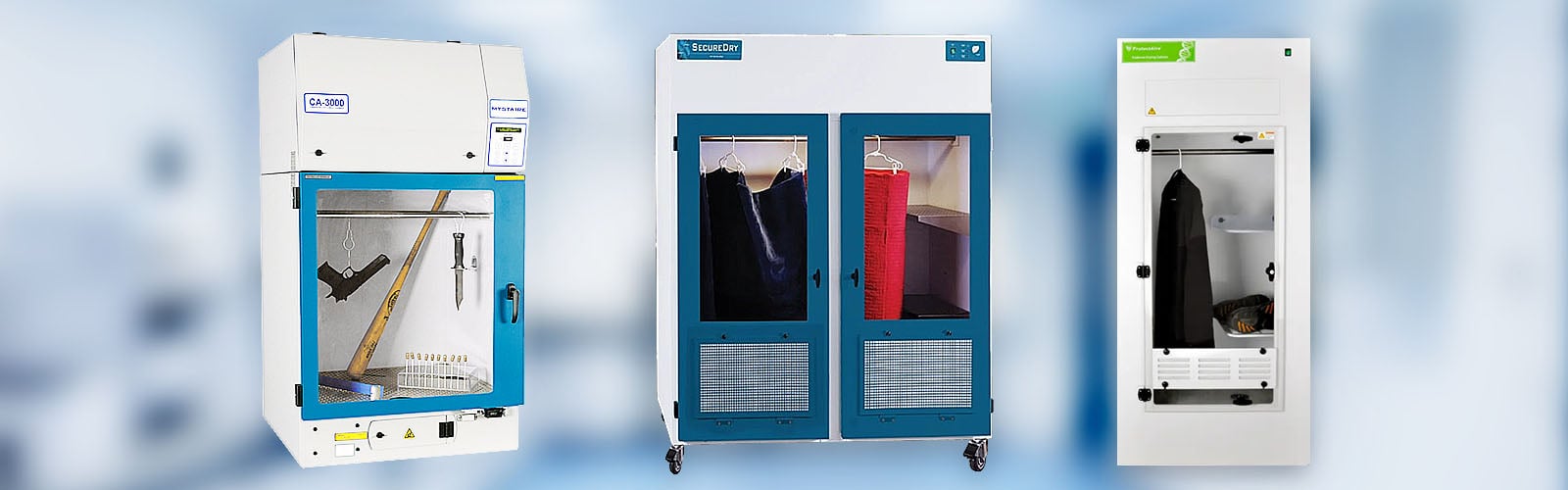
For the forensic laboratory manager, the choice often comes down to ventilation systems and industry leaders.
| Feature | Ducted Systems | Ductless Systems |
|---|---|---|
| Installation | Requires external venting/HVAC | Plug-and-play (No ductwork) |
| Mobility | Fixed location | Portable / Castor-mounted |
| Chemical Load | High (Vented outside) | Moderate (Carbon filtered) |
| Maintenance | Low (Fan/Duct cleaning) | High (Regular filter replacement) |
| Airflow Path | Exhausts air outside the building | Purifies air through filter and recirculates it back into the lab |
| Filtration | Primarily relies on external venting for safety; may use pre-filters | Dual filtration: intake pre-filters, HEPA filters, activated carbon filters |
| Decontamination | Typically connected to facility plumbing for wash-downs | Often features a self-contained basin/pump or internal UV-C sterilization |
| Safety Fail-safes | Relies on building fan | With onboard sensors/alarms |
| Forensic Integrity | High; intake air must be filtered to prevent lab dust from settling on evidence | Excellent; standardized intake filters ensure a contaminant-free environment |
Ducted cabinets vent fumes directly outside. They are excellent for heavy chemical loads, but require significant infrastructure changes and make the units immovable.
On the other hand, ductless cabinets recirculate air through high-efficiency filters. They are the dominant choice for evidence drying because they are plug-and-play, versatile, cost-effective, and energy efficient. However, they require a strict filter maintenance schedule to remain compliant with OSHA standards.
Industry Leaders in Forensic Technology
Brands like Air Science have built a reputation on their multiplex filtration technology, which offers broad protection against various families of chemicals and biologicals. Their units are staples in many departments due to their focus on filter longevity and operator safety.
Mystaire is also cited in lab specifications for its cyanoacrylate fuming chambers and drying cabinets. Its cabinets, such as the SecureDry and ProtectAire models, often lean heavily on automation and safety alarms that alert staff when airflow drops below safe levels, a critical feature for maintaining a safe forensic environment.
For evidence drying cabinets that combine performance and reliability, The Lab Depot is the perfect place to be. Talk to our team at 1-800-733-2522, email, or through live chat on our website for prompt and expert assistance.
Sources:
https://www.coleparmer.com/blog/csi-revisited-using-evidence-drying-cabinets/
https://www.locscientific.com/benefits-of-evidence-drying-cabinet-for-forensic-laboratory
https://laftech.com.au/product/safekeeper-evidence-drying-cabinet/
https://www.osha.gov/laws-regs/regulations/standardnumber/1910/1910.1450
https://www.airscience.com/evidence-drying-cabinet-provides-protection-from-contamination