

Which to Choose: Mercury Thermometer vs. Spirit Thermometer
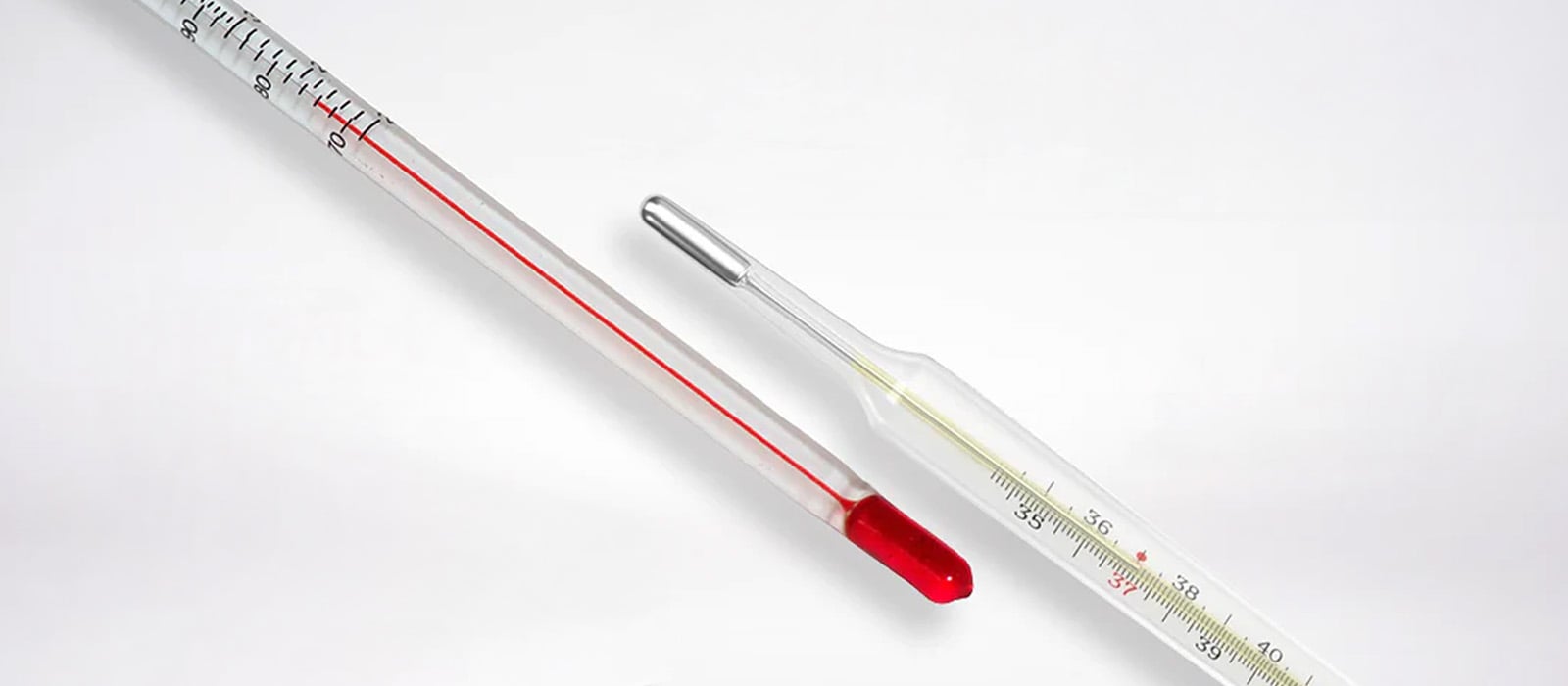
Before using a spirit or mercury glass thermometer, explore its pros, cons, and specific uses to know which thermometer is better for your lab applications.
Measuring temperature in any laboratory requires the right tool, whether a lab thermometer, thermocouple, or resistance temperature detector. Of these three instruments, glass thermometers are the most common and readily available in laboratories.
A liquid-in-glass (LiG) thermometer is a glass capillary tube with a bulb filled with liquid at one end. The liquid, which varies depending on the type of thermometer, expands or contracts with temperature changes. This article will discuss the features, benefits, and drawbacks of a spirit or mercury thermometer to help you choose.
Mercury Thermometers
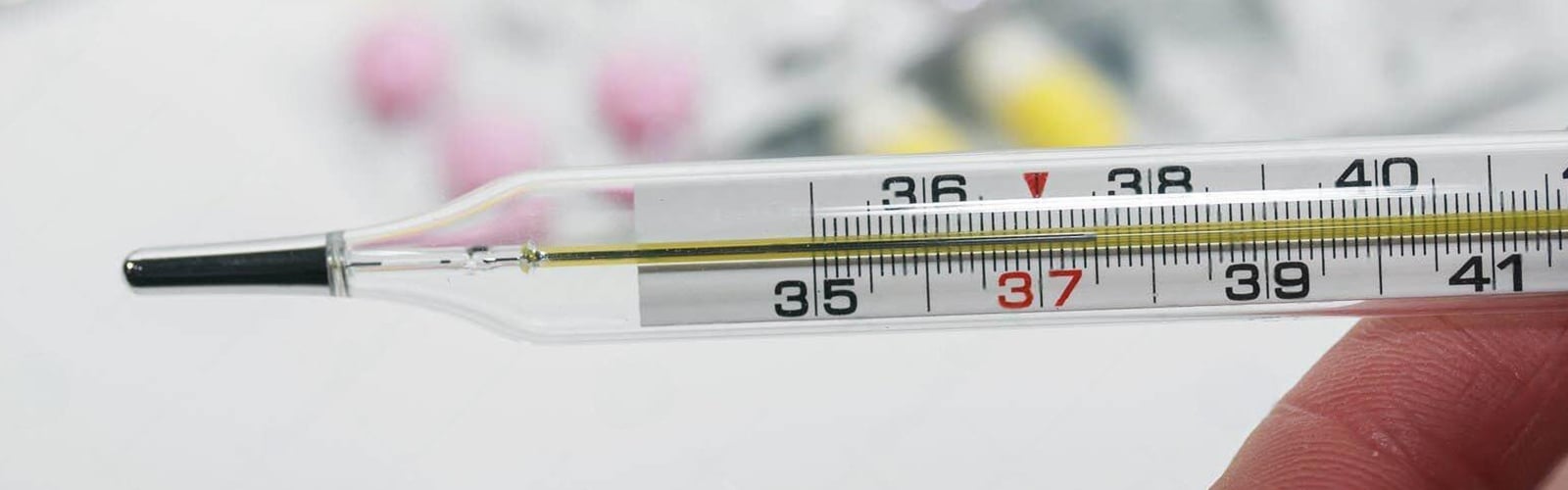
Mercury thermometers are the gold standard for accurate temperature readings. Mercury remains stable in temperature changes, withstand temperatures as high as 350°C, and even records temperatures as low as -56°C when mixed with thallium. Plus, it is non-volatile and does not cling to the capillary tube, so it does not evaporate over time.
Unfortunately, this liquid is highly toxic to human health and the environment. Mercury exposure can lead to vomiting, skin rashes, muscle weakness, memory loss, or kidney damage. This explains why mercury spilled from a broken thermometer must be carefully cleaned and disposed of according to the correct guidelines.
| Pros | Cons |
|---|---|
| High accuracy and repeatability | Risks of mercury exposure |
| Non-volatile | Not ideal for use in low-temperature applications |
| Excellent for high-temperature applications | NIST no longer offers calibration services |
| Does not cling to the capillary tube | Banned in several countries and U.S. states |
Regulations on the Use of a Mercury Thermometer
Many states and countries have restricted or banned the use of mercury-filled thermometers. In January 2013, more than 140 countries adopted the Minamata Convention on Mercury to control and lower global mercury pollution. Later that year, the U.S. signed the treaty.
In the U.S., the EPA and OSHA have issued guidelines to reduce mercury exposure, while the NIST has ceased calibrating mercury thermometers since 2011 and encouraged the switch to safer alternatives.
Several states have also passed laws restricting the manufacture, sale, and distribution of mercury thermometers. Please be aware that mercury-bearing products CANNOT be shipped to the following states:
| California | New Hampshire |
| Connecticut | New York |
| Illinois | Louisiana |
| Rhode Island | Maine |
| Vermont | Massachusetts |
| Washington | Wisconsin |
| Minnesota |
As a result, laboratories are shifting toward spirit thermometers and other digital alternatives to maintain accurate temperature measurement practices in safe working environments.
(Note: Since the NIST has ceased calibration of mercury thermometers, it is important to note that any mercury thermometers labeled as NIST Traceable are typically calibrated against standards traceable to the NIST during the manufacturing process but are not officially certified. If your instrument claims to meet these standards, contact the manufacturer for further details regarding the documentation process, measurement uncertainty, and how the standards are traceable to the NIST.)
Spirit Thermometers
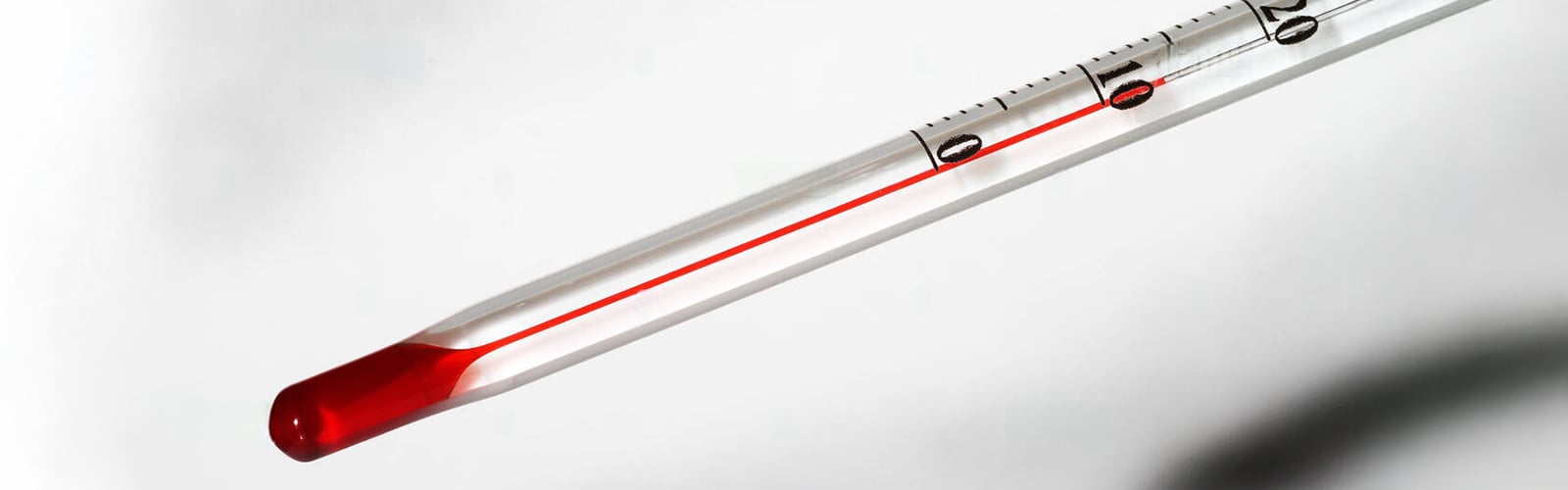
Spirit thermometers are excellent alternatives for health, safety, and legal reasons. They can contain toluene, alcohol, butane, or other organic liquids, usually mixed with a dye to improve visibility. The characteristics and properties of these liquids remain the same even as low as -100°C, much lower than mercury's freezing point. With a combination of ethanol, pentane, and toluene, they can read temperatures down to -200℃, making them perfect for ultra-low temperature applications.
However, this type of thermometer tends to be less precise compared to its mercury counterpart. Additionally, they may provide inaccurate measurements over time. The liquid tends to evaporate quickly and possibly stick to the capillary tube walls. Routine calibration by a certified lab or an authorized organization will help prevent temperature reading errors.
To ensure they can be used in laboratories and research facilities, ASTM International has set the ASTM E 1 standard specification for these thermometers' accuracy, materials, and performance. Non-mercury thermometers can also be calibrated against NIST-traceable references.
| Pros | Cons |
|---|---|
| Relatively harmless and safe | Organic liquids evaporate over time |
| Ideal for low-temperature applications | Less precise temperature readings |
| Calibration services to ensure accuracy | Requires regular calibration |
Which to Use to Measure Temperature

The comparison table below will help you decide which type of liquid-in-glass thermometer is best suited for your laboratory and applications.
| Mercury Thermometers | Spirit Thermometers | |
|---|---|---|
| Accuracy | Highly accurate | Requires calibration to ensure accuracy |
| Safety | Risks of mercury exposure | Relatively harmless and safe |
| Calibration | No longer offered by NIST | Available |
| Availability | Not allowed in 16 U.S. states | Available |
| Applications | High-temperature applications | Low-temperature application |
Mercury thermometers are the better option for high-precision temperature measurements. Applications like pharmaceutical testing and quality control require highly accurate and repeatable temperature readings, which spirit thermometers will struggle to provide. However, they are banned in selected states in the U.S., and NIST no longer provides calibration services for mercury-filled thermometers.
Spirit thermometers are highly recommended if your lab work involves cryogenic research, deep freezing, environmental monitoring, or any other application involving low temperatures. While they may inaccurately record temperatures at some point, they can still be calibrated and are safer to use, especially for routine temperature monitoring in research and educational labs in states where mercury-filled devices are prohibited.
Looking for NIST and ASTM-certified glass thermometers? The Lab Depot offers a wide selection of measuring devices from trusted manufacturers! Our expert and professional sales team is ready to help if you have product concerns. Contact us at 1-800-733-2522, by email, or through the live chat feature on our website.
Sources:
https://www.chem.purdue.edu/chemsafety/chem/HgFAQ.html
https://www.unitedsci.com/education/thermometers-red-spirit-filled.html
https://www.epa.gov/international-cooperation/minamata-convention-mercury
https://www.epa.gov/mercury/health-effects-exposures-mercury