

Simple Distillation Guide: Setup, Components & Pro Tips
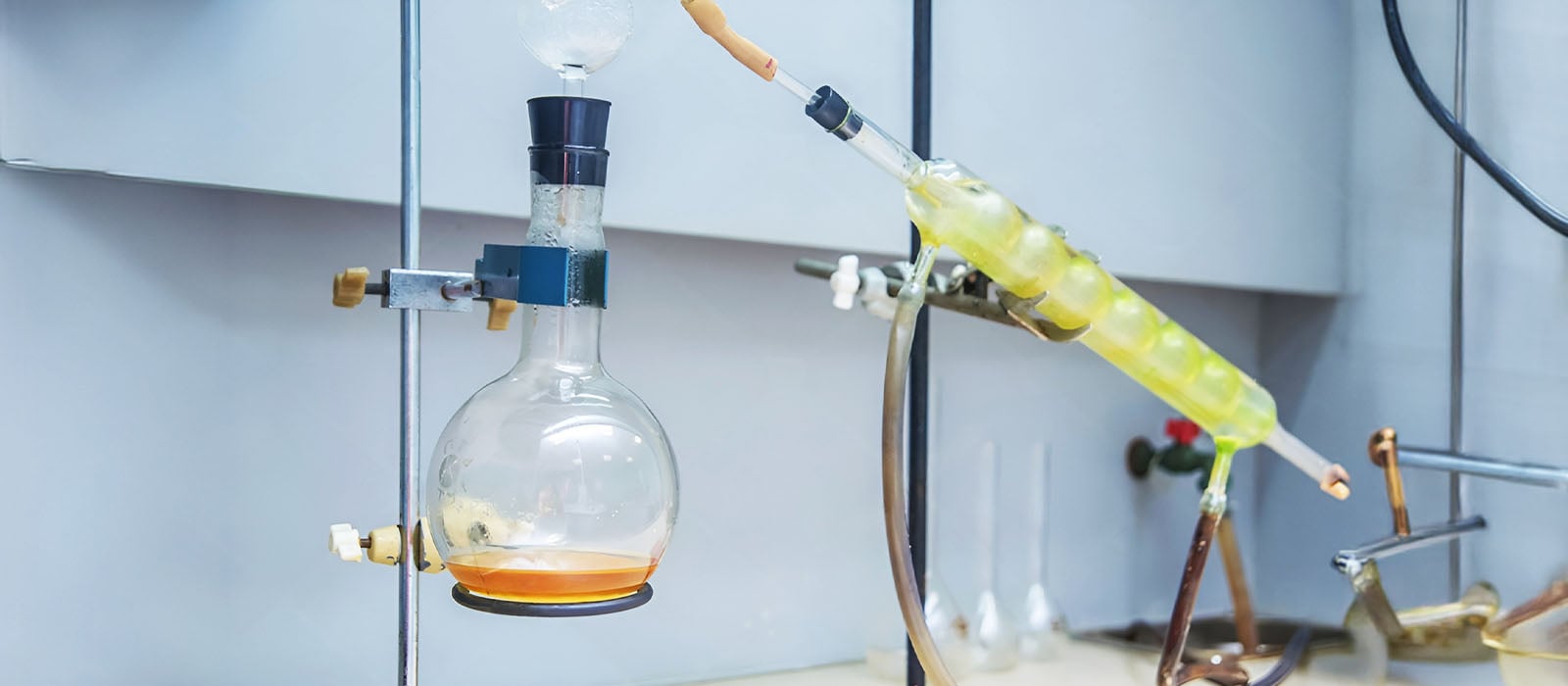
Explore the key parts of a simple distillation apparatus, how they work together to perform the distillation process, and tips on how to run a clean separation.
What is Simple Distillation?
Simple distillation is one of the most fundamental separation techniques used in chemistry labs, pharmaceutical research, water purification, and educational experiments. It is used to separate and purify liquids based on differences in their boiling points. Whether you're purifying a solvent, isolating a volatile compound, recovering a reagent, or removing water from an organic mixture, a simple distillation setup can get the job done with precision and repeatability.
Main Components of a Simple Distillation Apparatus
A simple distillation apparatus consists of interconnected glassware designed to heat a liquid, capture its vapor, and condense it back into a purified form. The primary components include:
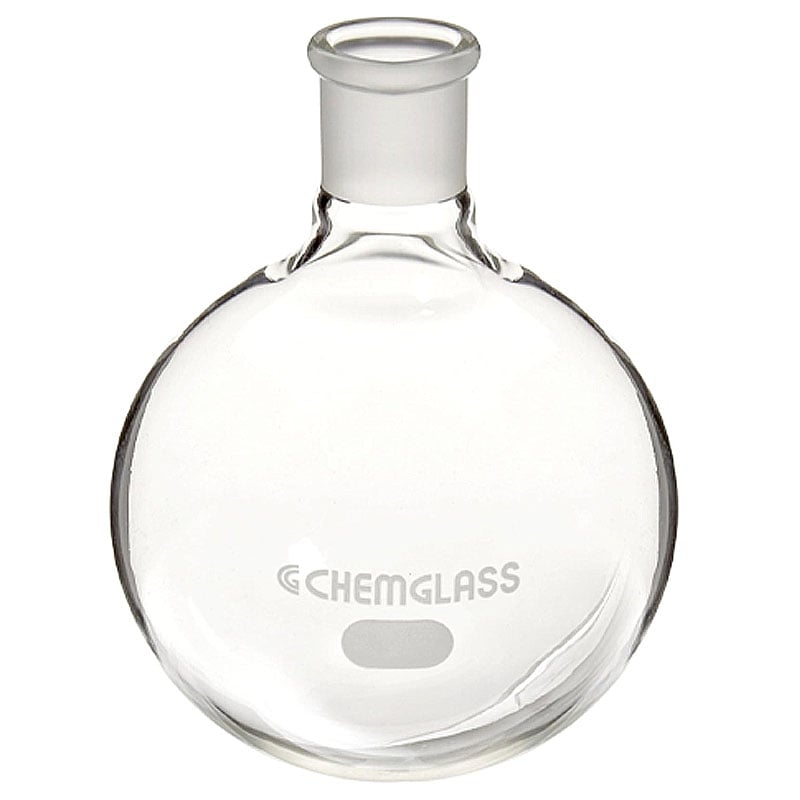
Round Bottom Flask
Round bottom flasks hold the liquid mixture that will be separated. They are heated using a heat source such as a heating mantle or hot plate. As the temperature increases, the liquid begins to boil and generate vapor. These distillation flasks are typically filled only one-third to one-half full to allow enough space for vapor formation and to prevent uncontrolled boiling.
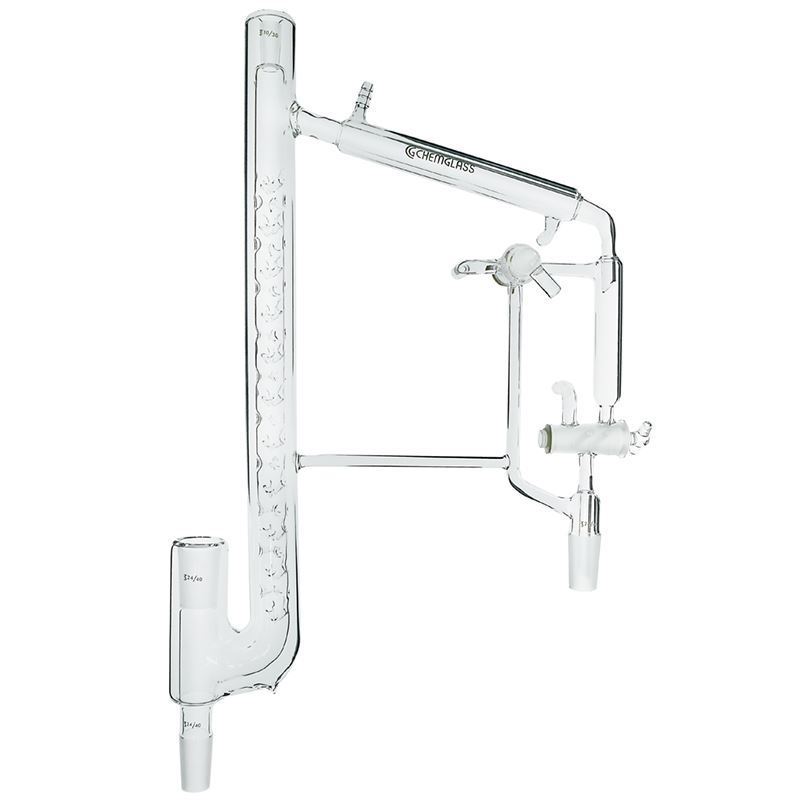
Distillation Head
Distillation heads connect the boiling flask to the condenser. They direct the vapor produced in the flask toward the condenser, where cooling occurs. These adapters also provide a connection point for the thermometer and allows for accurate monitoring of vapor temperature during the process.
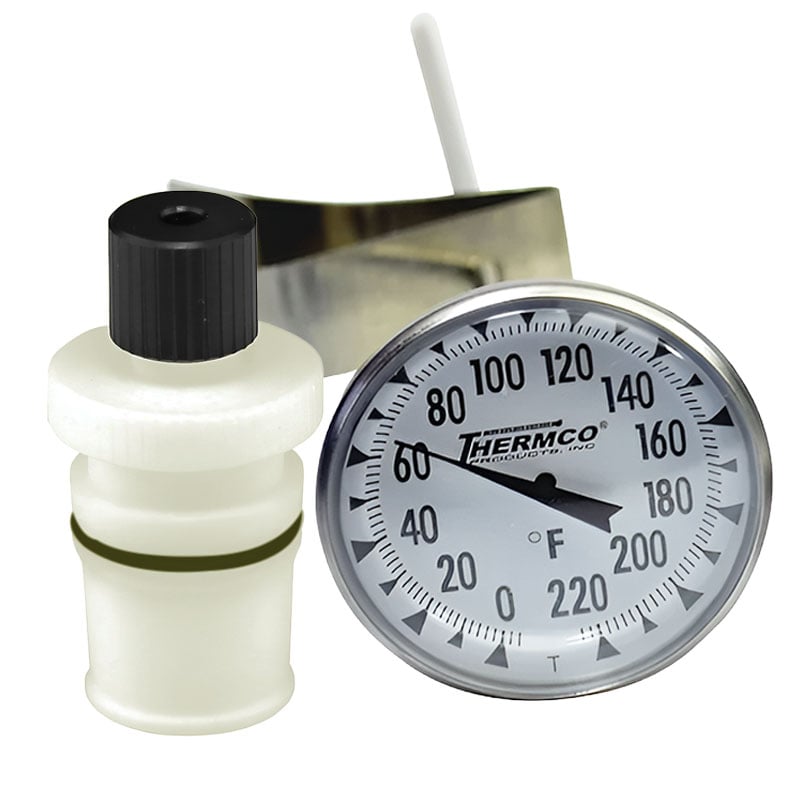
Thermometer and Thermometer Adapter
Thermometers measure the temperature of the vapor leaving the boiling flask. Monitoring this temperature is critical because it indicates the boiling point of the substance being distilled.
Placed through thermometer adapters, they are positioned so that the bulb sits just below the outlet of the distillation head. This ensures that it measures the temperature of the vapor rather than the surrounding air.
Condenser
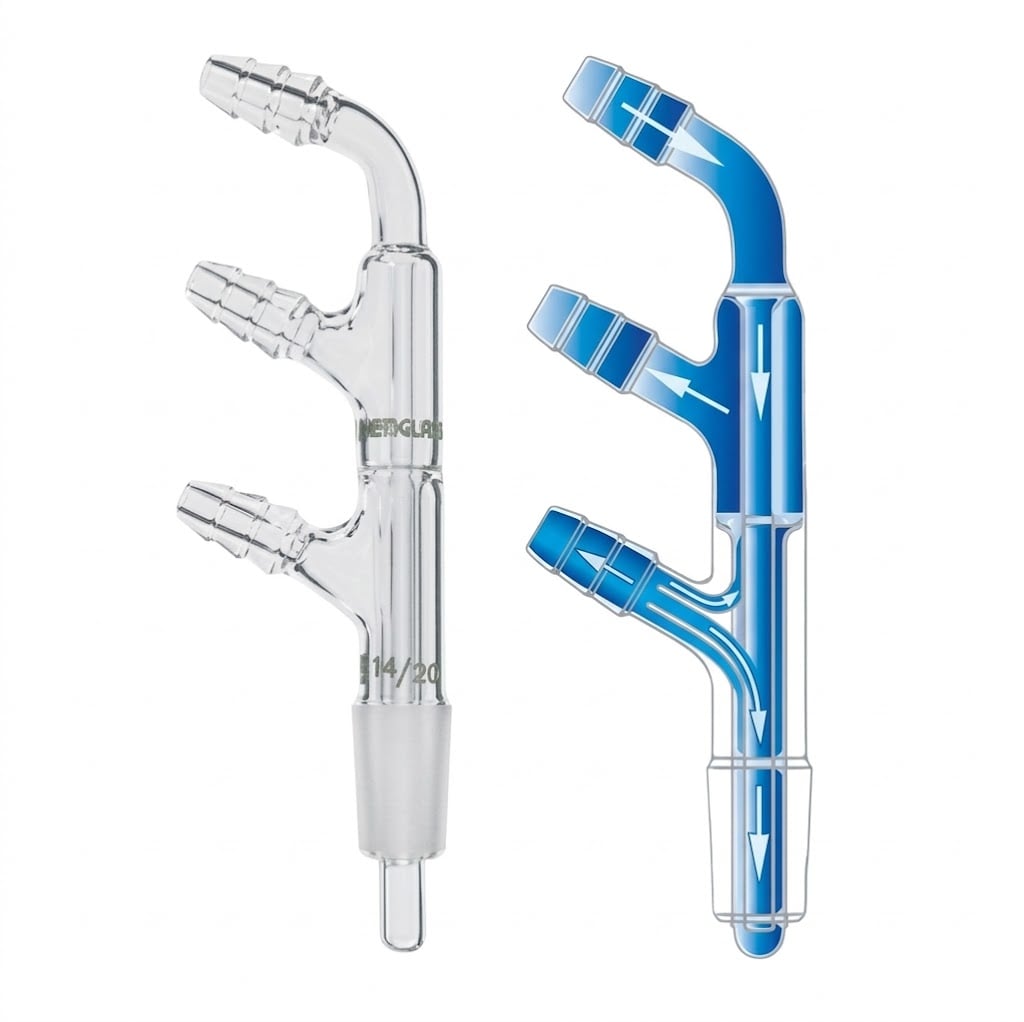
Condensers are used to cool the vapor and convert it back into liquid form. They contain an inner tube surrounded by a water jacket.
Cold water circulates through the outer jacket while vapor travels through the inner tube. This temperature difference causes the vapor to condense into liquid droplets.
Condensers require a continuous flow of cold water through its jacket to function. You have three practical options depending on your setup and constraints:
-
Flowing tap water is the simplest approach. Run cold water from the faucet through the condenser. No other equipment is needed, though it uses a continuous water supply.
-
Recirculating chiller is a closed-loop system that maintains a precise, consistent low temperature. It is preferred for long runs, temperature-sensitive compounds, or water-restricted environments.
-
Ice water with a pond pump is a low-cost alternative. Submerge a small pond pump in a bucket of ice water and run tubing to and from the condenser. It is highly effective for most routine separations.
Pro Tip: For most benchtop work, the ice bucket method offers excellent performance at minimal cost. For extended runs, keep extra ice available or use a chiller to avoid temperature creep as the ice melts.
Cooling Water Connections
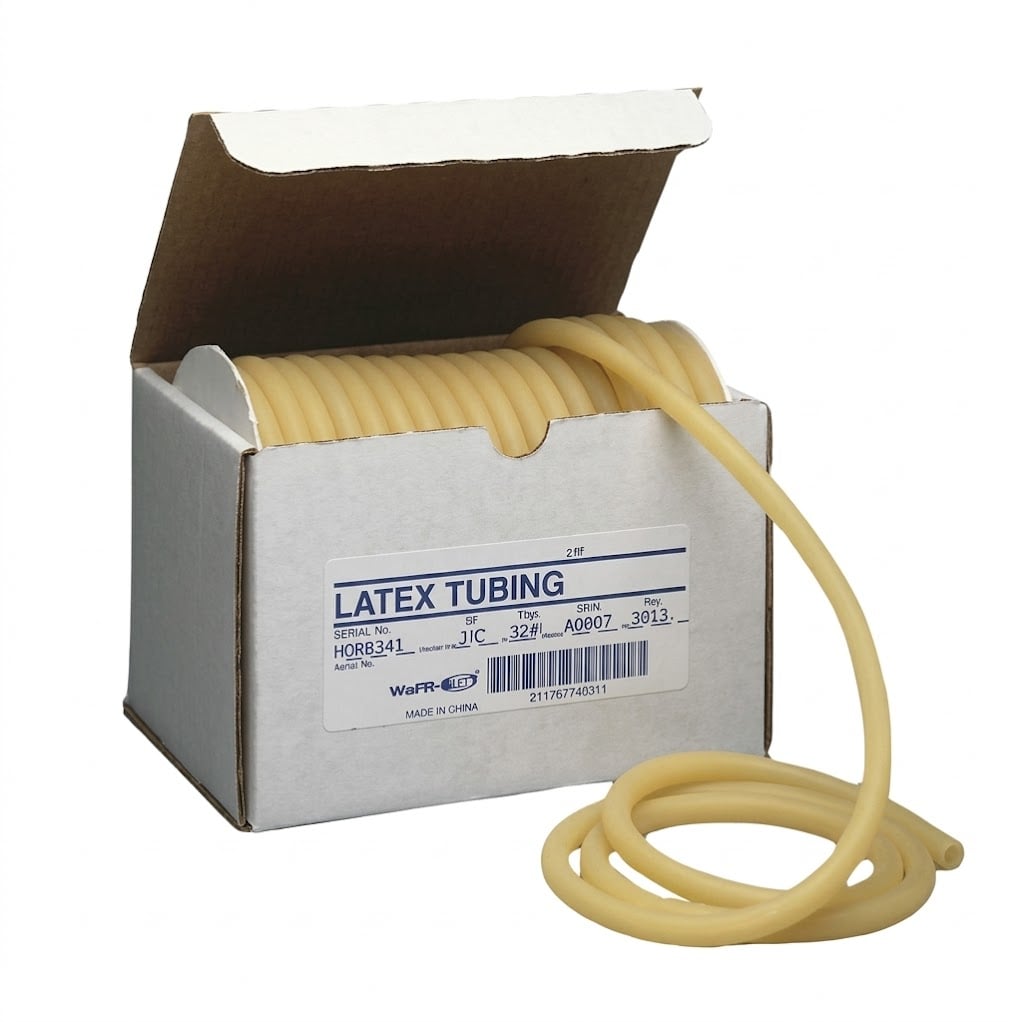
To get the cooling system running, rubber tubing is used to bridge the gap between the condenser and your water source. It is essential to direct the cold water into the lower port so that it exits through the upper port.
This bottom-to-top flow isn't just a convention—it ensures the cooling jacket remains completely primed and free of air pockets, which maximizes the surface area for heat exchange. By maintaining this steady circulation, the condenser stays at a consistently low temperature, providing the thermal gradient necessary for an efficient distillation from start to finish.
Receiving Flask
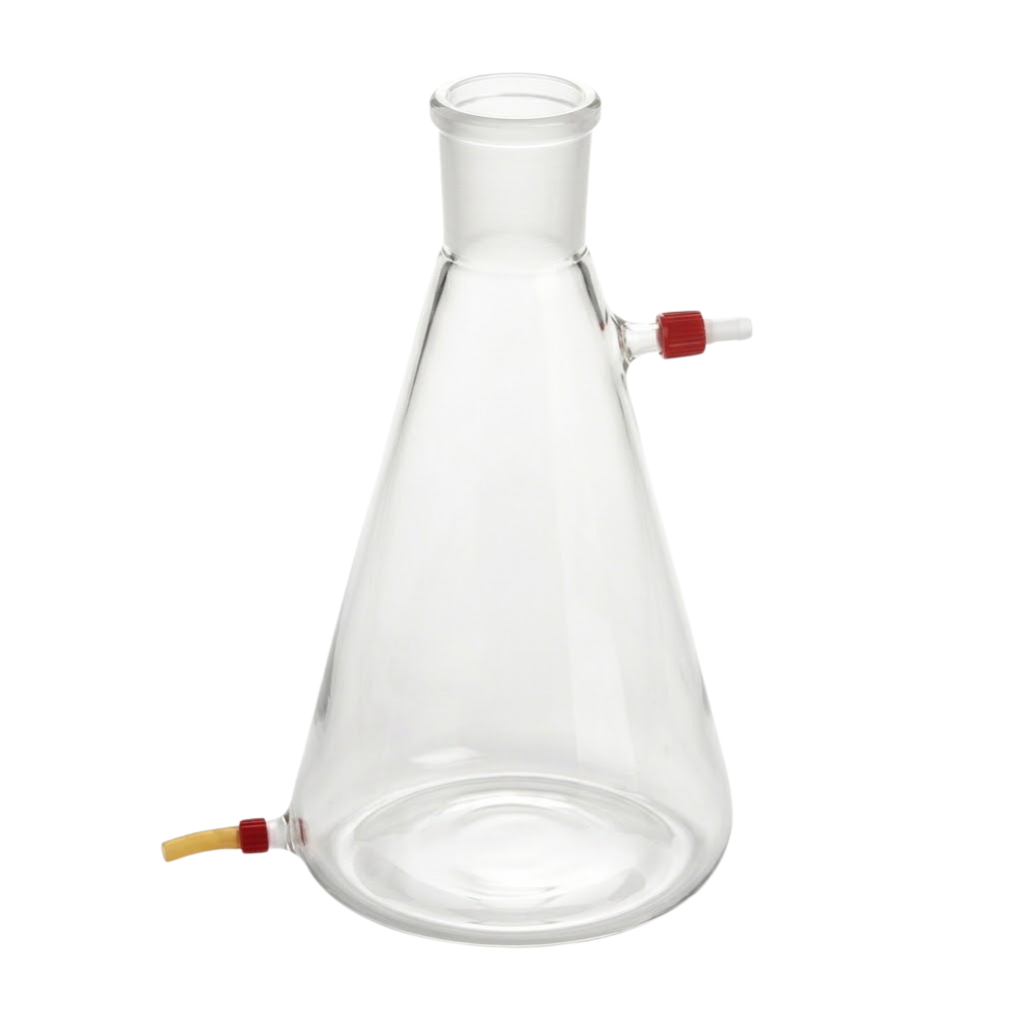
Receiving flasks collect the condensed liquid, known as the distillate. This is the purified liquid separated from the original mixture. Depending on the experiment, the receiving flask may be placed in an ice bath to improve condensation when dealing with volatile compounds.
How the Distillation Process Works
Once the apparatus of simple distillation is assembled and secured with clamps and supports, the distillation process follows several steps:
-
The liquid mixture is charged into the distillation flask.
-
Heat is applied to the flask until the solution reaches a steady boil.
-
The component with the lowest boiling point transitions into the vapor phase first.
-
Vapor travels through the distillation head into the condenser.
-
Cooling water in the condenser converts vapor back into liquid.
-
The purified liquid drips into the receiving flask as distillate.
Because the vapor phase favors the more volatile compound, the collected distillate is enriched in that substance.
Verifying What You've Collected
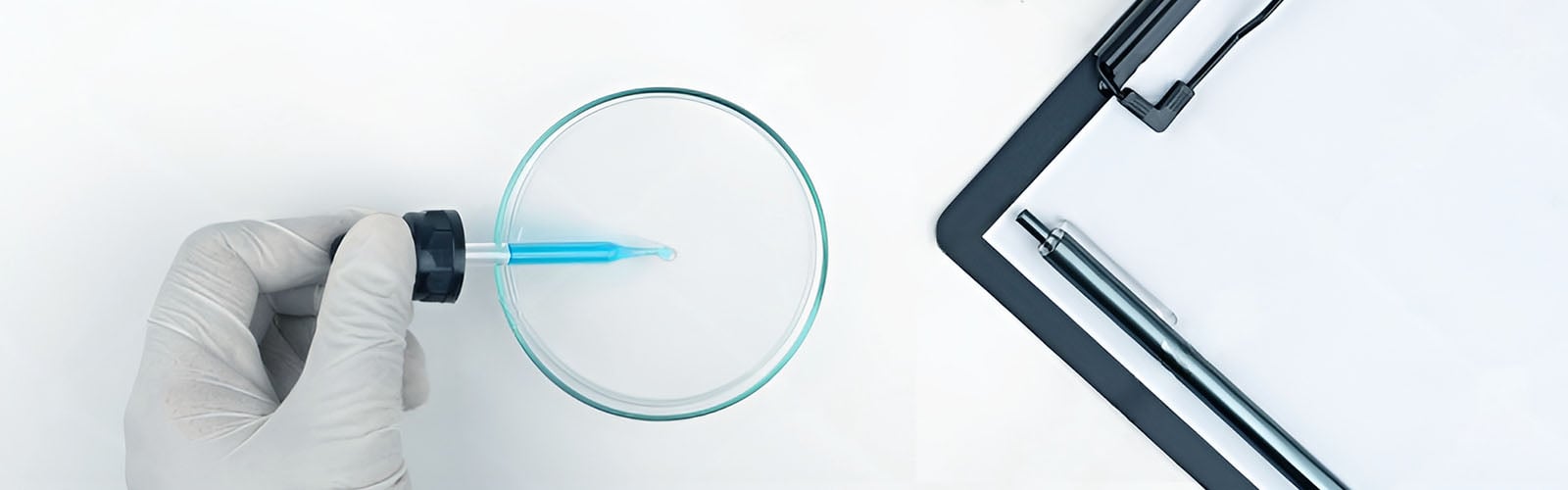
The watch glass test remains a reliable field method to use for a qualitative check of volatile compounds. By placing a few drops of your distillate onto the glass and monitoring the evaporation rate, you can get an immediate sense of the sample's composition.
A high-purity solvent, such as ethanol, will flash off quickly and cleanly at room temperature without leaving a trace. In contrast, water or aqueous mixtures evaporate at a much slower rate and often leave behind telltale mineral traces or "water spots."
When the application demands a higher degree of precision, qualitative observation must give way to quantitative analysis. Depending on the specific compound and the required level of sensitivity, several standard analytical techniques are typically employed, including refractive index measurement, gas chromatography, density comparison against published values, or spectroscopic analysis, depending on the compound and application.
Why Boiling Points Drive the Separation
Distillation works because different compounds vaporize at different temperatures. Isopropyl alcohol boils at approximately 83°C; water boils at 100°C. That 17-degree gap is your working window—the temperature range in which one component vaporizes while the other remains liquid.
Note: The goal is to maintain a flask temperature above the lower-boiling component's boiling point but below the next—so only the target compound vaporizes, travels through the condenser, and is collected as a purified fraction.
This principle applies universally. Whether you're separating ethanol from a fermentation mixture, recovering acetone from a reaction, concentrating a volatile flavoring compound, or isolating a low-boiling solvent from a higher-boiling impurity, the technique and logic are the same.
4 Tips for a Clean, Efficient Separation
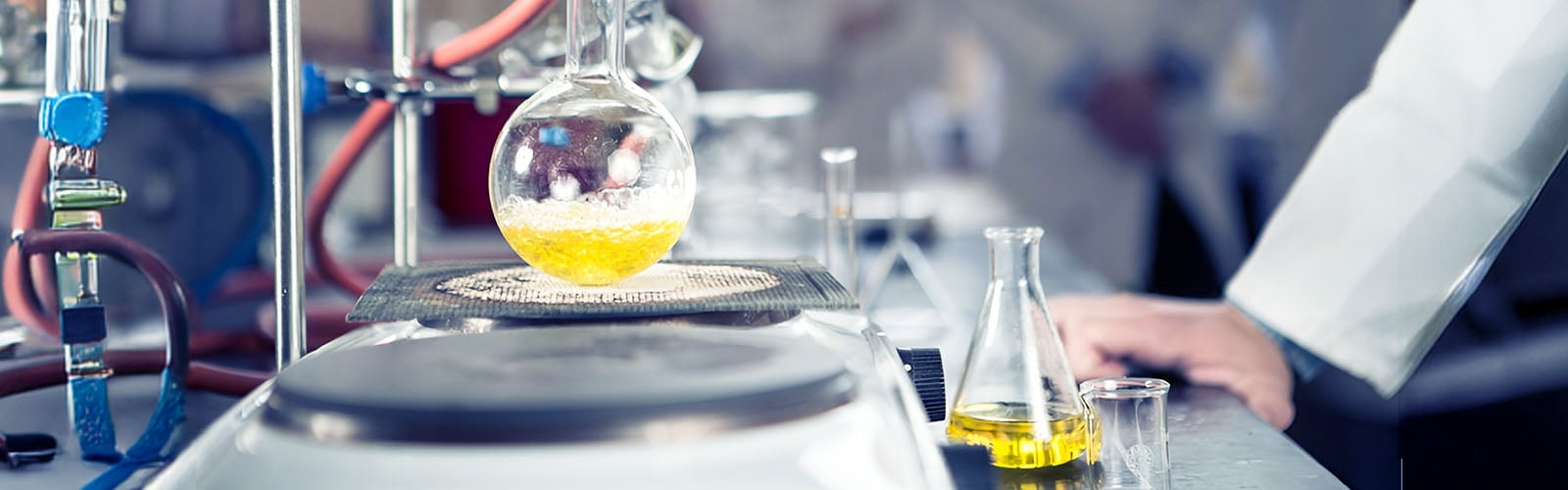
Tip #1: Optimize Your Receiver. For low-boiling compounds (like Ether or Pentane), use a narrow-neck flask and an ice bath to minimize evaporative loss.
Tip #2: Watch the Plateau. A steady temperature is your "purity signal." If the temp starts to climb rapidly, your first fraction is done—swap your receiving flask immediately.
Tip #3: Add Boiling Stones. Never add a boiling stone to a hot liquid (it can cause an instant boil-over). Add them while the liquid is cool to ensure a gentle, steady stream of bubbles.
Tip #4: The "First & Last" Rule. Always start the water flow before the heat and keep it running until the flask has cooled to the touch.
Essential Safety Rules
Proper assembly and handling of the distillation equipment are important for safety and accurate results. Common safety practices include:
-
Secure every piece of glassware with the right clamps to prevent shifts or mechanical stress on the joints.
-
Ensure all ground-glass joints are seated tightly to stop flammable or toxic vapors from escaping into the workspace.
-
Leave plenty of headspace in the boiling flask; overfilling is a fast track to bumping and contaminated distillate.
-
Keep a consistent and steady water flow through the condenser to maintain efficient cooling.
-
Never let the boiling flask run dry, as concentrated residues can overheat, scorch, or even become unstable.
These precautions help prevent glassware breakage, overheating, or vapor leaks during the experiment.
Planning to set up a new distillation apparatus for your lab? You can find a quality distillation kit, alongside columns, heads, receivers, and packing materials at The Lab Depot. Feel free to contact our team to help you find the components that you need through 1-800-733-2522, email, or live chat on our website.