

Precleaning Plastic and Glassware Services
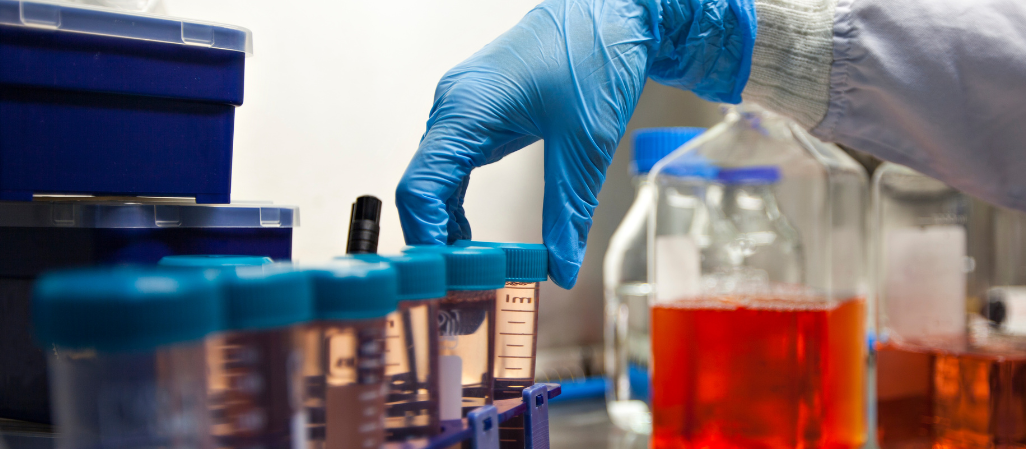
Ensure the purity of your sensitive applications with precleaned plastic and glassware containers. Learn about our manufacturers' sterilization service options.
Precleaning Services
Ordering factory-new plastic and glassware containers, such as bottles, vials, and jars, often arrive coated in release reagents and particulates due to unclean manufacturing environments. This can negatively skew the outcomes of sensitive applications, such as sampling, testing, and validation. Although these containers could be cleaned in-house, it may be difficult, inefficient, or unlikely due to the need for standards and certifications.
Fortunately, precleaning and pre-assembly services are available to clean and sterilize products using a variety of methods, ranging from de-ionized water rinsing to EPA Cleaning Protocol C, helping ensure clean products, storage, and transportation when applicable. View the chart below to see what sterilization services are available along with additional information:
| Process | Material Type |
Certified | Standards | Particle Remover | Wash | Description |
|---|---|---|---|---|---|---|
| Vacuum & Ionization | Any | No | Visible Particles/USP | Yes | No | This process eliminates contaminants, including loose dirt, dust, carton lint, and fine glass particles. Read More |
| De-Ionized Water Rinse | Any | No | Visible Particles | Yes | Yes | This process of rinsing products with deionized water eliminates the same contaminants as the Vacuum & Ionization process and any particles clinging to the package that cannot be removed with air. |
| Silanization | Glass | Yes | Dip In Solution of 5-10% Imethyldiethoxysilane Followed by Heating | No | Yes | Silanization is primarily used for glass vials. It prevents biological compounds from interacting with the glass and materials from sticking to the container's surface, allowing for maximum recovery of the contents. |
| Gamma Irradiation | Type 3 Glass HDPE |
Yes | Cobalt 60 Radiation | No | No | This is a type of electromagnetic energy with low dose rates. The process uses Cobalt 60 radiation to kill microorganisms in the product and packaging with little temperature effect. |
| ETO Sterilization | Any | Yes | Ethylene Oxide Sterilization | No | No | This sterilization process uses a colorless, flammable gas. The degree and level of sterilization required will depend on the specific product. |
| Autoclaving | Glass Polypropylene Containers Mineral-Filled Phenolic Caps with Rubber Liners Polypropylene Caps Unlined or With PTFE Disc Liners |
Yes | Moist Heat Sterilization | No | No | This sterilization process is typically done in the lab for equipment and supplies, as the steam can reach small crevices and kill all bacteria, viruses, and bacterial spores. Read More |
| Depyrogenation | Glass | Yes | Washed with USP/EP WFI | No | No | This procedure is essential for removing pyrogens, contaminants that cause fever, such as bacteria, and even fragments of dead bacteria, which can be challenging to eliminate and may not be affected by pH changes. |
| Ultra Clean | Any Plastic Glass (No Glued-In Liners on Caps) |
Yes | No More Than 1 Particle of 5 µm or Larger per mL | Yes | Yes | The ultra clean process removes particles that are 5 µm and larger. |
| Super Clean | Any Plastic Glass |
Yes | No More Than 1 Particle Greater Than 10 µm Size per mL of Bottle Volume | Yes | Yes | Products that have undergone super clean procedures meet or exceed the specification of having less than 10 particles per mL that are larger than 10 µm in size. |
| Total Organic Carbon (TOC) | Glass | Yes | USP 643 | No | Yes | TOC is a sample's total amount of organic carbon. This process is certified to contain less than 20 μg/L, or 10 μg/L (same as ppb). |
| EPA Cleaning Protocol A for Semi-volatile Organics, Pesticides, Metals, and Inorganics | Glass Bottles with PTFE Disc-Lined Caps | Yes | EPA Cleaning Protocols for Contaminant-Free Sample Containers | No | Yes | EPA Cleaning Protocol A for Semi-volatile Organics, Pesticides, Metals, and Inorganics uses an automated cleaning system with trace-grade Nitric Acid and ASTM Type 1 water before being dried. Read More |
| EPA Cleaning Protocol B for Volatiles | Glass Vials and Larger Containers with Septa Caps | Yes | EPA Cleaning Protocols for Contaminant-Free Sample Containers | No | Yes | EPA Cleaning Protocol B for Volatiles uses an automated cleaning system with ASTM Type 1 water before being dried. Read More |
| EPA Cleaning Protocol C for Metals | Platic Containers with F217 Lined PP Caps | Yes | EPA Cleaning Protocols for Contaminant-Free Sample Containers | No | Yes | EPA Cleaning Protocol C for Metals uses an automated cleaning system with trace-grade Nitric Acid and ASTM Type 1 water before being dried. Read More |
Are you ready to place an order, or have any additional questions regarding precleaning services? Contact our expert team at 1-800-733-2522, by email, or through the live chat feature on our website.