

Medical Syringes & Needles: Types, Uses, Tips & Buying Guide
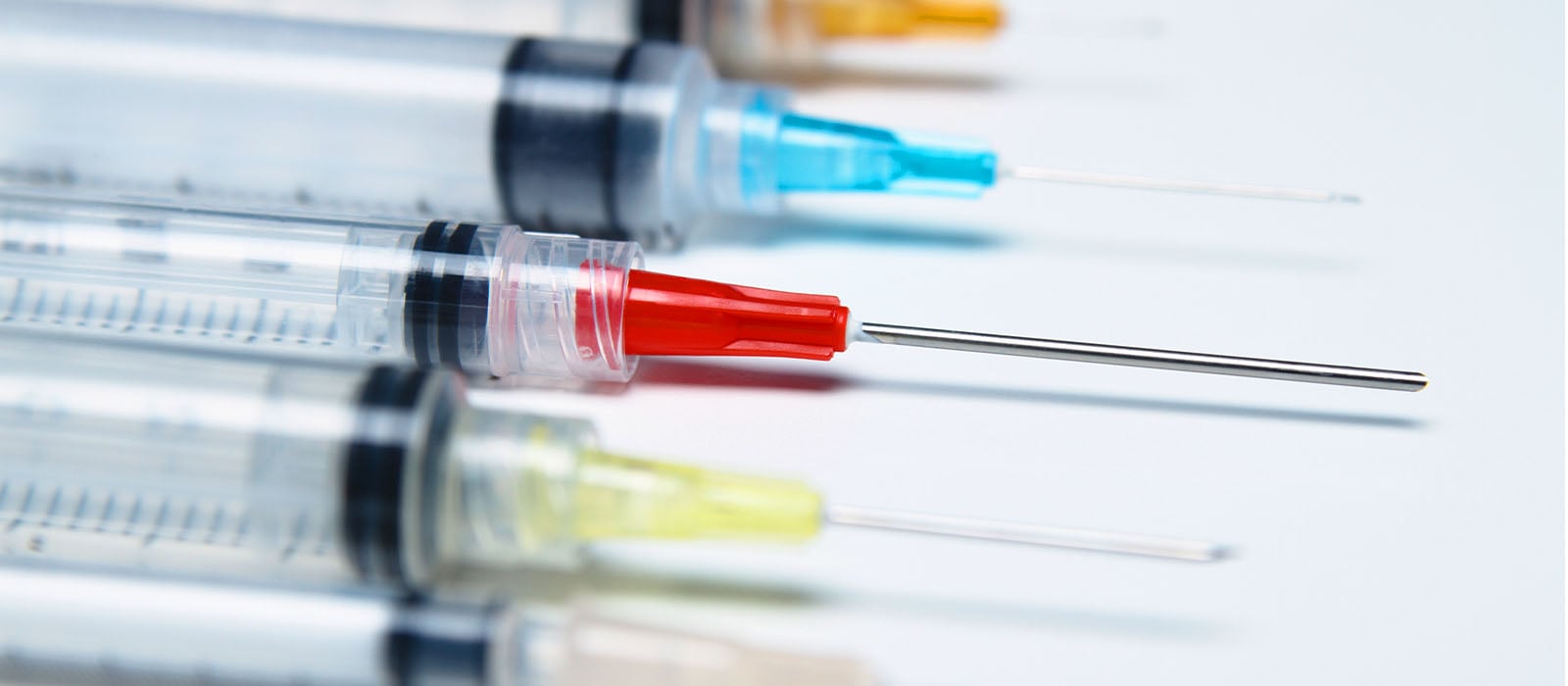
Confused by needle gauge sizes and syringe tips? Explore our complete guide to syringe components, sizing charts, types, and trusted medical supplies.
A medical syringe is composed of a barrel, a plunger, and a needle used to inject or withdraw fluid. While hospitals, clinics, and research laboratories all rely on syringes, each application demands specific dimensions and design features.
Picking the right one isn't complicated once you know what to look for. Three primary factors drive the choice: what is being administered, how much of it, and where it is going. From there, the correct gauge, length, and tip type become straightforward.
Syringe Components and Tips
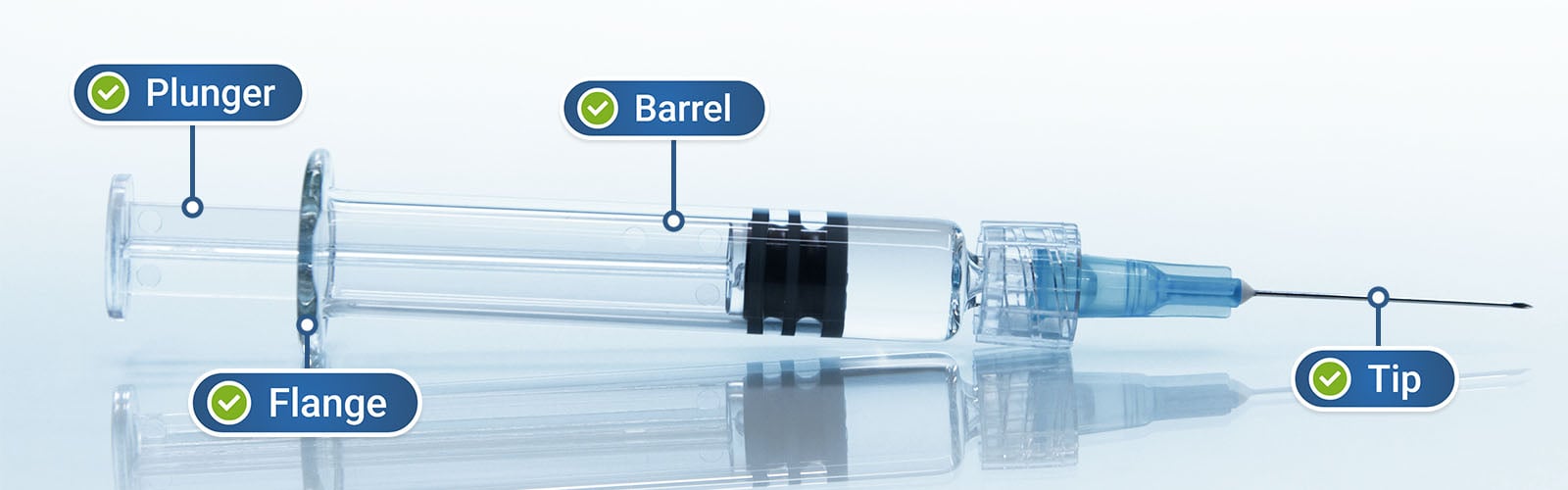
A syringe has four working parts, and once you can name them, half the confusion around product listings disappears.
| Component | Function |
|---|---|
| Barrel | Cylindrical body that holds the fluid; marked with volume gradations |
| Plunger | Rod and rubber-tipped piston that draws in or expels fluid |
| Flange | Finger grips at the base of the barrel; keeps the syringe stable while the plunger is pushed |
| Tip | Connection point where a needle attaches |
The syringe tip is where most buyers get confused, mainly because two of the three standard types look nearly identical in a product photo. Here are the different tip styles and how they differ from each other:
-
Luer Lock Tip: A threaded collar sits around the connection point, and the needle twists on until it locks in place. It won't pop off under pressure, which is why it's the standard choice for IV work or thicker fluids. The Lab Depot offers BD® Sterile Luer-Lok™ Tip Syringes from NDC. These sterile syringes are available in volumes ranging from 1 mL to 50 mL.
-
Luer Slip Tip: Faster to attach and remove, but it can separate if back pressure builds up. It's ideal for routine, low-pressure injections rather than anything under strain. The Lab Depot carries BD® Non-Sterile Disposable Slip Tip Syringes in 1 mL, 3 mL, 5 mL, 10 mL, and 30 mL.
-
Eccentric Tip: Off-center connection located near the outer edge of the barrel. This design keeps the needle parallel to the skin surface, making it ideal for shallow venipunctures or hard-to-reach veins.
-
Catheter Tip: Features a long, tapered tip designed to attach directly to catheters or feeding tubes rather than hypodermic needles. Frequently used for flushing and irrigation. The Lab Depot features 60 mL Sterile Catheter Tip Syringes from Sol-Millennium.
Needle Measurements
Once the syringe tip style is selected, choosing the right needle comes down to two measurements: gauge and length. Selecting the improper dimensions impacts flow rate, dosing precision, and patient comfort.
Gauge
Gauge measures the outer diameter of the needle shaft. The scale is inverse: the larger the gauge number, the thinner the needle. A 14-gauge needle is fairly thick, while a 30-gauge needle is barely visible in profile.
| Gauge | Outer Diameter | Typical Use |
|---|---|---|
| 14 to 16G | ~1.6 to 2.1 mm | Blood donation, fast fluid transfusion |
| 18 to 20G | ~0.9 to 1.3 mm | Drawing medication from vials, IV starts |
| 21 to 23G | ~0.6 to 0.8 mm | General injections, blood draws |
| 25 to 27G | ~0.4 to 0.5 mm | Intramuscular and subcutaneous injections |
| 28 to 30G | ~0.3 mm | Insulin, dermal fillers, fine cosmetic work |
Length
Length matters just as much as diameter. Subcutaneous injections call for something short, 5/16" to 5/8", while intramuscular injections need enough length to actually reach muscle tissue, typically 1" to 1.5". Injection site and patient body type both factor in here, so when the medication label or a prescriber specifies a length, that instruction should override any general rule of thumb.
NOTE: Some manufacturers tack an "s" onto a gauge number, like 22s or 26s. That suffix signals a thinner wall and narrower inner channel than the standard version of that gauge, usually to add durability without changing the outer diameter buyers are used to seeing.
Types and Uses of Medical Syringes
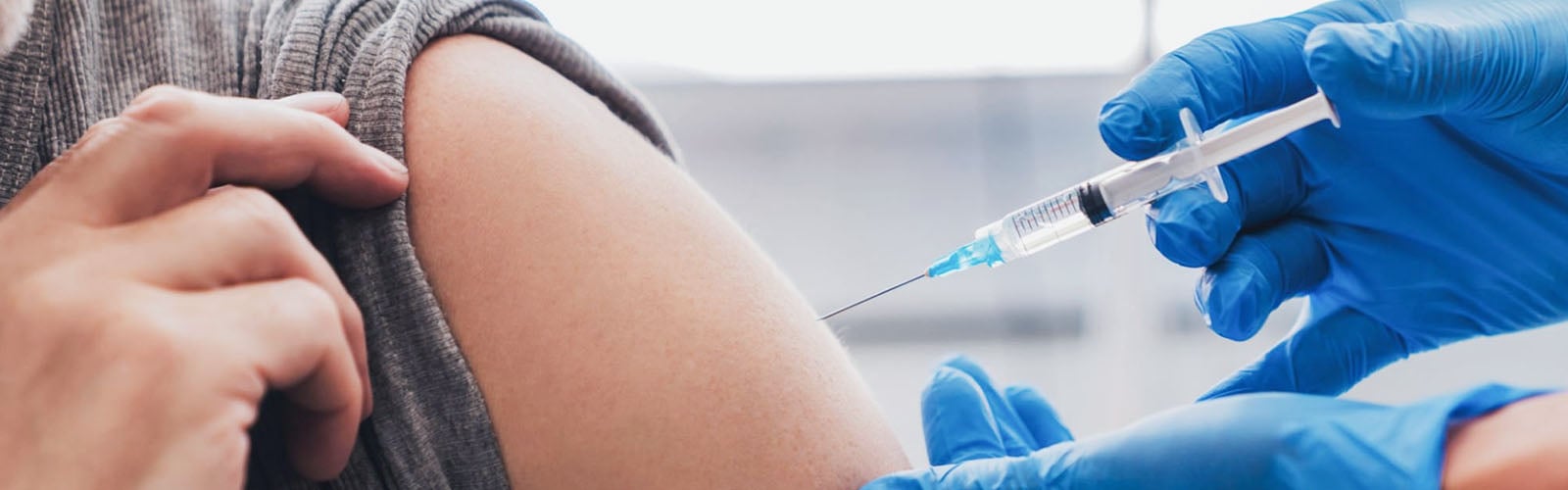
Components and measurements only tell half the story. The rest comes down to what a syringe is actually being asked to do.
-
Injections (IM, subQ, IV): Intramuscular injections need to travel deep into muscle, which calls for a longer needle at a mid-range gauge. Subcutaneous injections stay in the fatty layer just under the skin and use something shorter and finer. IV work goes the other direction, favoring larger-gauge needles or catheters so fluid can move quickly.
-
Wound Irrigation: Here the needle often disappears completely. Larger syringes, usually in the 20–60 mL range, are used to flush wounds with saline or an antiseptic solution, no needle required.
-
Medication Dosing: Oral and medication syringes prioritize one thing above all else: accurate volume measurement. There's no needle involved, so the entire design is built around getting the dose right.
-
Veterinary Use: Livestock dosing in particular tends to lean on larger-volume syringes paired with heavier-gauge needles than most human applications ever need.
-
Laboratory and Research Use: Sterility protocols take a back seat to repeatable precision in most lab settings. Syringes here get chosen for exact, consistent measurement rather than the safety features clinical environments require.
7 Critical Factors When Purchasing Medical Syringes
Based on the questions we hear most often from clinics, caregivers, and individual buyers, the decision usually comes down to seven factors:
-
Intended Use: Injecting medication, drawing blood, irrigating a wound, and dosing an oral medication all call for different equipment. Nailing this down first narrows everything else considerably.
-
Required Volume: Match the barrel to the dose, not the other way around. For example, a 1 mL syringe used for a 0.3 mL insulin dose won't measure accurately, and a 60 mL barrel is equally unsuitable for that same small dose.
-
Needle Gauge and Length: Driven by injection type and fluid viscosity. Thicker fluids need a lower gauge number, meaning a wider opening, or they'll clog.
-
Sterility and Packaging: Every unit should arrive individually sealed and sterile, especially for anything that penetrates the skin.
-
Safety Features: Retractable-needle and shielded syringes cut down on needlestick risk, which matters most in clinical settings, caregiving situations, or anywhere multiple patients are involved.
-
Regulatory Requirements: Rules around syringe needles for sale vary state by state — some allow unrestricted retail purchase, others cap quantities or require documented medical need. Worth checking before placing a large order.
-
Bulk vs. Individual Purchasing: Clinics and long-term caregivers tend to save meaningfully by buying by the case instead of the box.
Main Types of Syringe Supplies
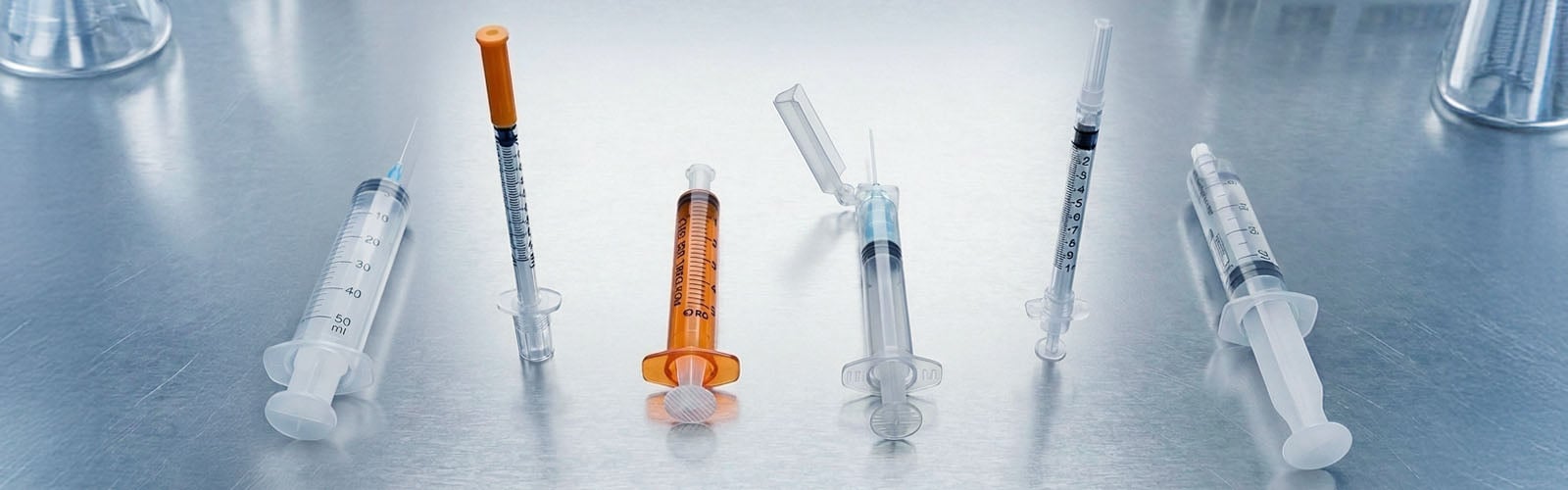
Those seven factors usually point buyers toward one of a handful of standard categories. Here's what's typically available when shopping for syringe supplies:
-
Standard Hypodermic Syringes: The general-purpose option, covering a wide range of injections and fluid transfers. Usually sold from 1 mL up to 60 mL.
-
Insulin Syringes: Smaller barrels, 0.3 mL to 1 mL, with fine needles permanently attached and markings in units rather than milliliters, designed for precise diabetes dosing. The Lab Depot supplies Sol-Millennium Insulin Syringes with Fixed Needles. They are free of DEHP, PVC, and latex.
-
Oral and Medication Syringes: Needle-free, with a twist-on cap, designed to measure and deliver liquid medication by mouth. Common in pediatric and elder care. The Lab Depot provides Oral Dispensing Syringes from Sol-Millennium, available in sterile and non-sterile options.
-
Safety-Engineered Syringes: A retractable or shielded needle locks into place after use. These are becoming close to standard in clinical settings for good reason.
-
Tuberculin Syringes: Very small, typically 1 mL, and fine-gauge. Originally intended for TB skin testing, now used anywhere accurate small-volume dosing is needed.
-
Prefilled Syringes: Pre-loaded with a medication or vaccine dose straight from the manufacturer, skipping the draw-up step.
Essential Complementary Items
A syringe rarely does its job alone. Buyers searching for syringe needles for sale usually end up needing a short list of supporting supplies as well:
-
Alcohol prep pads for cleaning the injection site and vial top before drawing medication. The Lab Depot stocks Sol-Millennium Alcohol Swab Prep Pads. They are sterile, individually wrapped in 4-layer wrappers, and available in medium size.
-
Sharps disposal containers that are tough and puncture-resistant, required by law in many states for safe needle and syringe disposal.
-
Gauze and adhesive bandages for post-injection care.
-
Vial adapters, which let you draw from the same vial repeatedly without puncturing the rubber stopper each time.
-
Needle destruction devices, compact units that clip or disable a needle right after use, an alternative to sharps containers in some home settings.
-
Disposable gloves, standard for anyone administering injections to someone else, caregivers included. The Lab Depot features HandPRO® Scion700™ Nitrile Exam Gloves from Hourglass International. They are available in x-small, small, medium, large, and x-large sizes.
Where to Buy Online
Once you know the category and the supporting supplies you need, the last decision is where to actually buy. Purchasing syringe supplies online is usually simple, especially when you shop at reputable suppliers such as The Lab Depot.
The Lab Depot offers a wide range of syringes, needles, and accessories from trusted brands and manufacturers, including Sol-Millennium, NDC, and Hourglass International. If you need help choosing the right supplies for your tasks, contact our expert team by phone at 1-800-733-2522, by email, or through live chat on our website.
Sources:
https://www.fda.gov/media/82389/download
https://stacks.cdc.gov/view/cdc/31800/cdc_31800_DS1.pdf
https://www.hamiltoncompany.com/knowledge-base/article/needle-gauge-chart
https://www.interlab.co.nz/the-anatomy-of-a-disposable-syringe-2
https://legalclarity.org/can-you-buy-syringes-over-the-counter/