

6 Ways to Extend the Life of Your ORP, ISE & pH Electrode for Reliable Water Analysis
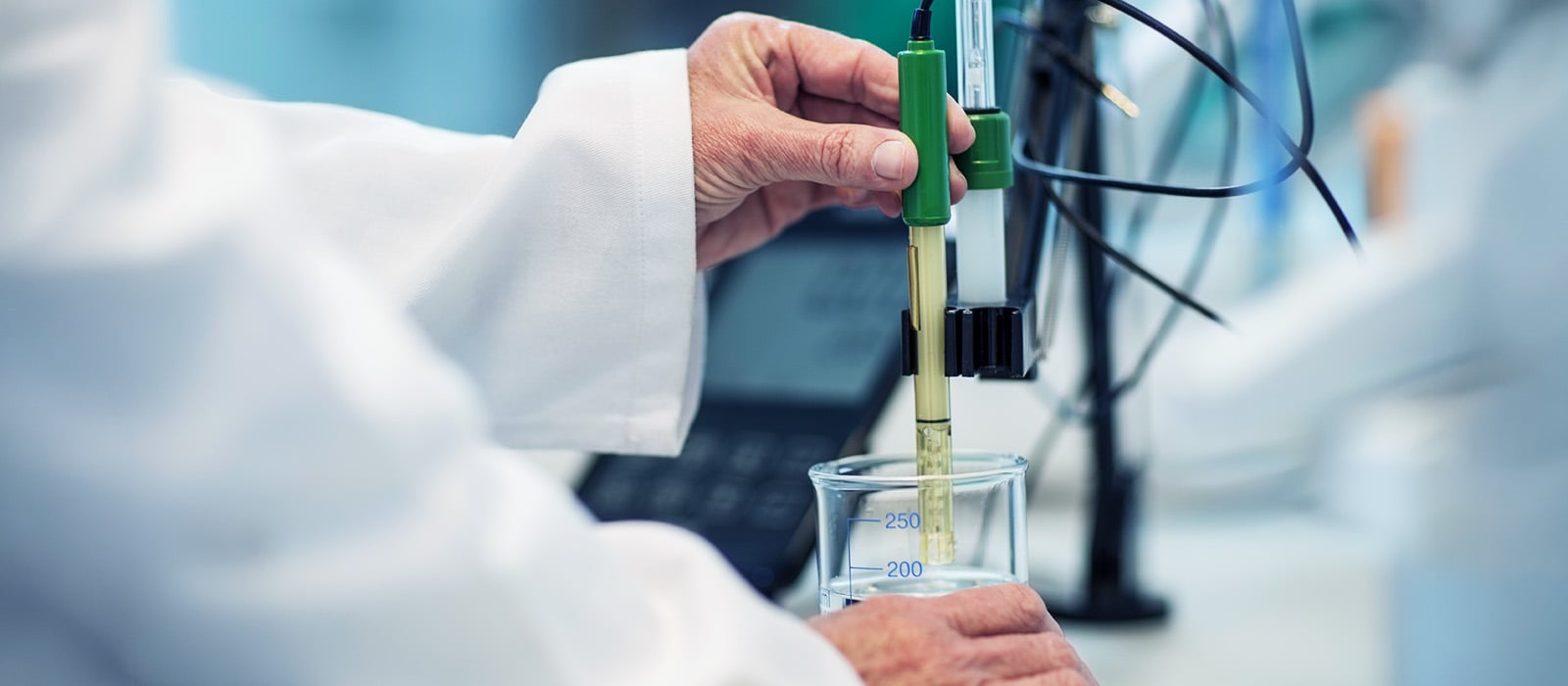
Optimize your water analysis by preserving your ORP, ISE, and pH electrodes. Learn expert storage, cleaning tips, and how to prevent sensor drift.
Electrochemical electrodes or sensors, including ion selective, ORP, and pH electrodes, are the most sensitive components in your water analysis kit. They tend to drift, clog, and malfunction over time when mishandled or poorly maintained.
Replacing these sensors every few months is an expensive habit that most lab budgets can't sustain. By shifting from a reactive replacement mindset to a proactive preservation mindset, you can often double the service life of your electrodes. Here are effective ways to maximize the lifespan of your water analysis electrodes:

#1 Understand why electrodes fail.
Most analytical electrode failures aren't catastrophic mechanical breaks but are failures of chemistry.
The Sensing Membrane: Usually a glass bulb, this must remain hydrated to maintain its "gel layer" where ion exchange occurs.
The Reference Junction: This must allow a steady, microscopic flow of electrolyte to complete the electrical circuit.
When that junction clogs or the membrane dries out, your readings become slow, erratic, or impossible to calibrate.
#2 Master proper electrode storage.
Storing electrodes dry or in the wrong liquid is the quickest way to ruin an ORP, pH, or ion selective electrode. Before you store your electrodes, take note of these tips:
-
Never store an electrode in distilled or deionized water. Because deionized water has no ions, it will aggressively leach the salt ions out of the electrode's internal electrolyte. This results in a slow-responding sensor that may never recover.
-
Always store electrodes in a dedicated storage solution. This solution is typically 3M or 4M KCl. If it's unavailable, a pH 4 or pH 7 buffer can serve as a temporary substitute.
-
Perform extra steps if storing electrodes for more than two weeks. Fill the protective cap with solution, ensure the bulb and junction are submerged, and seal the cap with Parafilm® M to prevent evaporation and salt crystallization.

#3 Follow specialized cleaning protocols.
Cleaning is not one-size-fits-all. Match your cleaning agent to the specific contaminant:
| Contaminants | Recommended Cleaning Agent | Cleaning Procedure |
|---|---|---|
| Proteins | 0.1M HCl with 1% Pepsin | Soak the electrode tip for 15 to 30 minutes. The pepsin enzymatically digests the protein buildup. |
| Grease, Fats, and Oils | Mild Dish Soap, Ethanol, or Isopropanol | Rinse with a warm detergent solution or briefly swirl in a solvent. Avoid aggressive scrubbing. |
| Inorganic or Mineral Scale | 0.1M HCl or 0.1M HNO3 (Nitric Acid) | Soak for 5 to 10 minutes. The acid dissolves calcium carbonate and other mineral deposits. |
| General Clogging or Salt Buildup | Warm 3M–4M KCl (approximately 60°C) | Soak for 20 minutes. The heat helps dissolve crystallized salts blocking the reference junction. |
| Biofilms or Algae | 1% Sodium Hypochlorite (Bleach) | Soak for 5 minutes. Rinse thoroughly to eliminate biological growth. |
NOTE: After any chemical cleaning, always re-hydrate the electrode in storage solution for at least two hours before calibrating.

#4 Never wipe electrode bulbs
This is the most common "rookie mistake." Wiping a glass bulb with a tissue (even Kimwipes) creates a static charge that causes readings to drift for several minutes. It also risks scratching the delicate hydrated gel layer.
The Pro Move: Rinse with DI water and gently blot the tip with a lint-free tissue to remove hanging droplets.

#5 Track your electrode's health using the Nernst equation.
To determine if your electrode is healthy, look at the Slope after a two-point calibration. The theoretical response of a pH electrode at 25°C is -59.16 mV per pH unit.
We use the Nernst Equation to understand this relationship:
E = E° − RT nF ln Q
In the context of pH, this simplifies to:
E = E° − (59.16 mV) pH
Based on the slope, you can determine if your electrode is in excellent condition, needs cleaning, or requires replacement or rejuvenation.
-
Excellent: 95% to 102% slope (56 to 60 mV/pH).
-
Warning: 90% to 94% slope. It's time for a deep clean.
-
Failed: Below 90%. The electrode has likely reached its end-of-life.

#6 Perform “radical conditioning”.
If the slope is failing and standard cleaning didn't help, try a final etching process:
-
Soak the tip in 0.1M HCl for five minutes.
-
Soak the tip in 0.1M NaOH for five minutes.
-
Soak in Storage Solution for 24 hours.
This process chemically etches the outermost layer of the glass to reveal a fresh surface. If the slope doesn't improve after this, it is time for the recycling bin.
These steps can help ensure that your electrodes remain in excellent condition for longer and that your water quality probe provides accurate readings. If you're looking for specific electrodes for your research, feel free to contact The Lab Depot team at 1-800-733-2522, email, or through live chat on our website.
Sources:
https://www.southforkinst.com/how-to-clean-ph-electrodes-for-maximum-life/
https://www.phionics.com/resources/orp-and-conductivity-electrode-care-and-troubleshooting/
https://pulseinstruments.net/content/PDF/Electrode%20Maintenance.pdf
https://assets.fishersci.com/TFS-Assets/LSG/manuals/D15603~.pdf
https://www.hamiltoncompany.com/knowledge-base/article/ph-and-orp-electrode-cleaning