HPLC Solvents 101: Exploring Their Role in Chemical Analysis
HPLC Solvents 101: Exploring Their Role in Chemical Analysis
High-performance liquid chromatography (HPLC) helps separate, identify, and quantify complex mixtures, making it a fundamental technique in chemical analysis. At the heart of this process are HPLC solvents. Find out what they do, their different types, and the common solvents used.
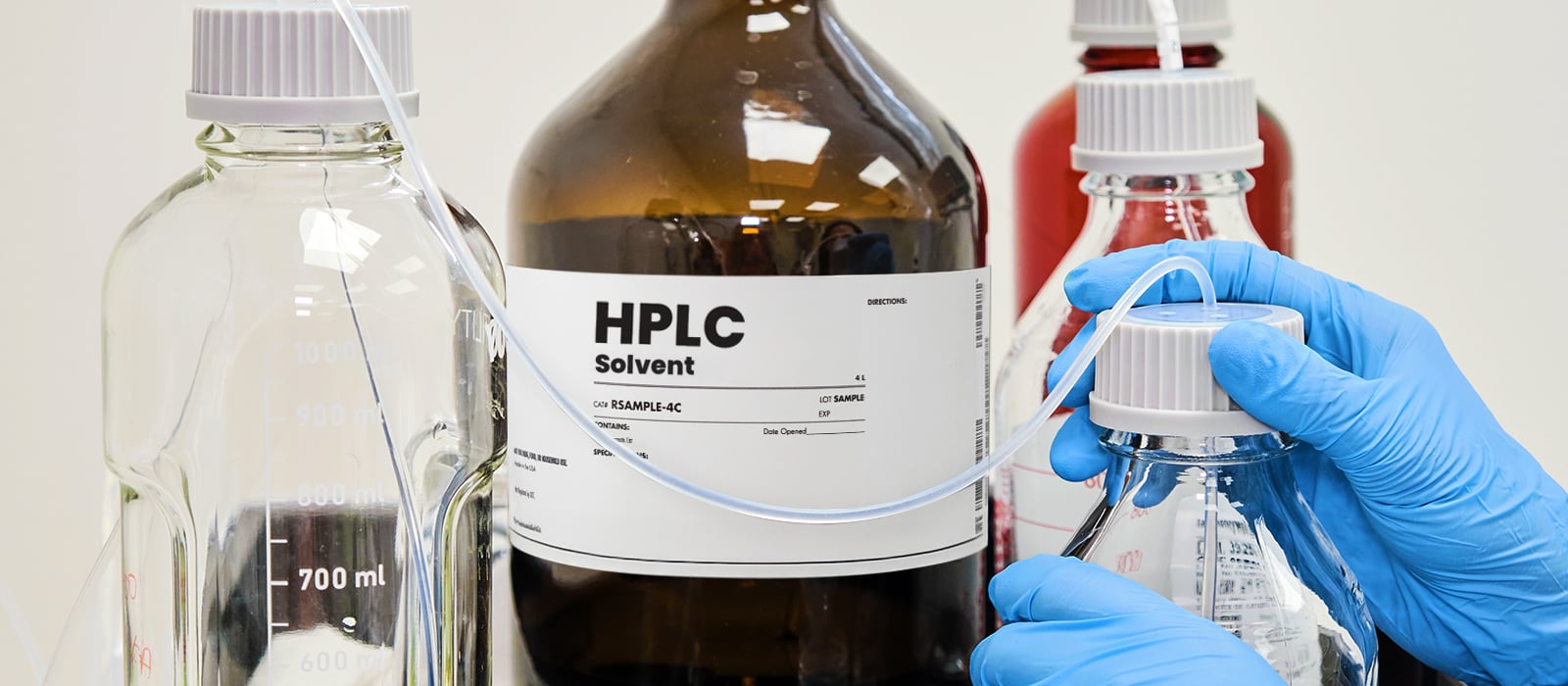
HPLC solvents function as the mobile phase in HPLC systems. They are high-purity liquids tasked to dissolve and transport analytes through the stationary phase. With their help, a sample's components are effectively separated based on chemical properties such as molecular weight or polarity.
Compared to regular solvents, they must be pure because only in this state can they reduce background noise and prevent contamination. However, they should have high purity standards to ensure consistent and reproducible results, which are also necessary for regulatory compliance.
What Solvents Can Be Used in HPLC?
Different types of HPLC solvents serve various analytical needs in chemical manufacturing. They can be aqueous, organic, or even used in specific and unique chromatographic applications. Check out which types are best for which applications and examples for each solvent type.
Organic Solvents
These solvents improve solubility and separation efficiency in both normal-phase and reversed-phase HPLC. Common examples include acetonitrile, methanol, ethanol, and isopropanol.
Acetonitrile has low viscosity and high elution strength, making it one of the most frequently used solvents for chromatography. On the other hand, methanol is a versatile option used in reversed-phase HPLC and provides different selectivity from acetonitrile. Meanwhile, ethanol and isopropanol are excellent choices for applications requiring lower toxicity or alternative solvent selectivity.
Aqueous Solvents
HPLC grade ultrapure water and buffer solutions, such as phosphate or acetate buffers, effectively separate polar compounds in reversed-phase HPLC. They help keep the pH level stable and influence analyte retention times.
Modifier Agents
Acids and bases are additives that adjust pH or improve peak resolution, enhancing HPLC solvents' performance. For instance, formic acid and trifluoroacetic acid (TFA) are used in mass spectrometry applications to improve peak shape and ionization efficiency. In addition, bases like triethylamine and ammonium hydroxide effectively control the pH of basic compounds in mobile phases.
Specialty Solvents
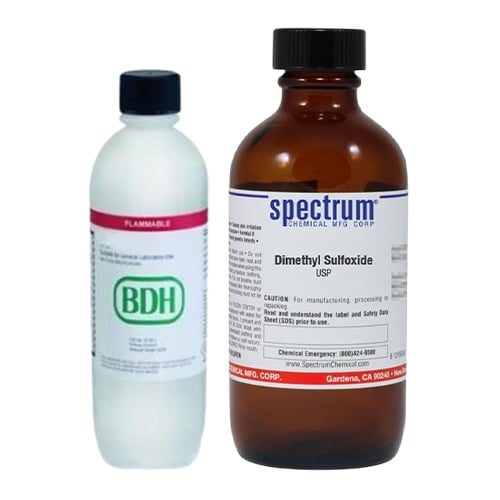
Because of their specific solvating properties, Tetrahydrofuran (THF) and Dimethyl sulfoxide (DMSO) are specialty solvents. THF has strong elution power and can dissolve various compounds, making it a go-to solvent in polymer analysis. DMSO comes in handy in processes that require analysis of poorly soluble or highly polar compounds.
Helpful Tips When Selecting HPLC Solvents
Consider these factors when looking for the proper HPLC solvent for your application:
Use solvents that are labeled "HPLC grade." These solvents have undergone purification to ensure zero traces of particulates, impurities, and residues, which can interfere with chromatographic analysis.
Ensure the stability of solvents. Instability can lead to unexpected side reactions as some solvents can degrade quickly or react with sample components. When these happen, the reliability of results is significantly reduced, and their reproducibility is highly compromised.
Solvents should have low UV absorbance. This prevents any interference with detection in UV-Vis spectroscopy, for example. When background absorbance is high, analytical signals are masked while sensitivity is reduced.
Prioritize solvents with lower viscosity. This reduces system backpressure, ensuring smooth flow inside the column while prolonging column life. Volatile solvents can be beneficial when preparing samples, but excessive volatility demands careful handling and storage.
Know the specialties of specific solvents, as some work better with certain detection techniques like fluorescence spectrometry. For instance, acetonitrile is a solvent commonly used in mass spectrometry applications because of its ionization properties and low background noise.
FAQs
What are five common solvents used in chromatography?
The solvents' chemical properties and availability primarily explain why some are more commonly used than others. In liquid chromatography, the five most common solvents besides water are tetrahydrofuran, methanol, ethanol, acetonitrile, and dichloromethane.
Why are two solvents used in HPLC?
The polarity of the mobile phase is gradually adjusted when two solvents are used. It improves analyte separation by altering the elution strength of the solvents, wherein the more polar solvent becomes the weaker eluting solvent. Meanwhile, the less polar solvent becomes the stronger eluting solvent.
Discover a wide selection of lab solvents at TLD! Contact our team at 1-800-733-2522, email, or through live chat on our website for expert support.
We have received your request and are working hard on your quotation. Please allow 24 - 48 business hours for quote processing. You will receive a copy of your request to the email attached.
We look forward to serving you.
Thank you!
We have received your request and are working hard on your quotation. Please allow 24 - 48 business hours for quote processing. You will receive a copy of your request to the email attached.
We look forward to serving you.
The Lab Depot uses cookies to improve your experience on our site. By clicking “Dismiss”, you consent to the use of all cookies which enable you to have a more personalized shopping experience. The Lab Depot does not sell any personal information. For more information, please read our privacy policy.