

Finding the Ideal Lab Chiller: What You Need to Know
Last Updated: December 12, 2025
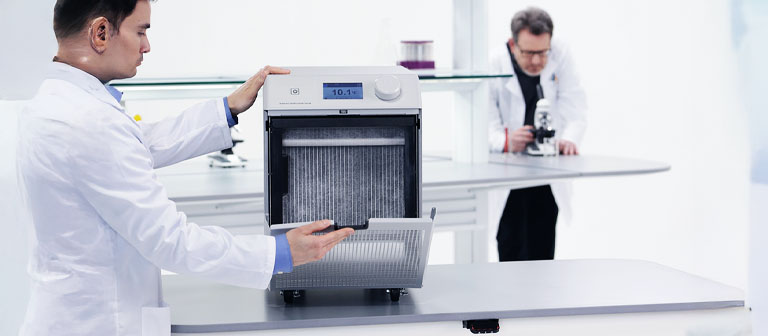
Select the best laboratory chiller for your workflow with tips on heat load, flow rate, chiller types, safety features, and future lab needs.
A lab chiller is a must-have in laboratories that run temperature-sensitive applications. It circulates coolant through the equipment being cooled, helping achieve and maintain stable temperature control and preventing lab equipment from overheating, which various factors can cause.
The chiller you use has a direct impact on the accuracy of the results, your productivity, and even the lifespan of your equipment. If you are purchasing your first laboratory chiller or upgrading to a new one, ensure that your chosen unit matches your current and future work. Follow this practical checklist to make your decision process easier and more efficient.
Take Note of the Desired Coolant Temperature
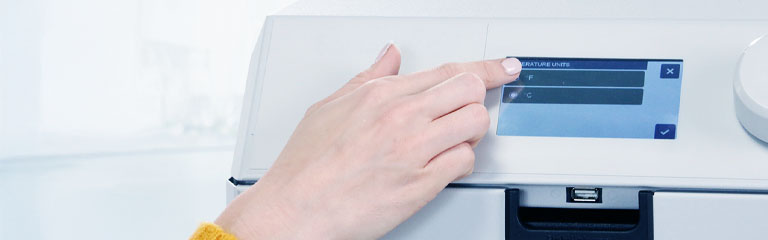
Measure the coolant temperature at your process's or equipment's inlet, not at the chiller itself. That is the desired coolant temperature. Coolant warms up as it moves through tubing, especially over long distances. Even a few feet of uninsulated line can introduce more heat gain than expected.
If your chiller sits far from your equipment, consider insulating the lines or rearranging your layout so the chiller can sit closer. The steadier the coolant temperature at the inlet, the more consistent your experiment or process will be.
Calculate or Confirm Your Heat Load
Your heat load is the amount of heat your chiller needs to remove. Equipment manufacturers usually provide this value. Otherwise, use this general formula to calculate the heat load:
Heat load = Flow rate × Fluid density × Fluid specific heat × Constant × ΔT
Here, ΔT represents the temperature differential—the difference between the fluid inlet temperature and the outlet temperature. Note that fluid density and fluid specific heat depend on the specific coolant being used, such as a water/glycol mixture.
Getting this number right is vital. An undersized chiller will constantly struggle to keep up, while an oversized one may short-cycle, wasting energy and wearing out components faster than necessary.
A buffer of 20% to 50% above the calculated heat load is standard. Such is the case if the workload is not steady, the room gets warm, or the chiller is required to operate at higher elevations. This cushion also offers flexibility for future projects that may require more cooling. However, keep in mind that an excessively oversized chiller will not cool better and will cost more to buy and run.
Match the Correct Flow Rate and Pressure

Stable cooling depends not only on temperature but also on moving coolant through the system at the proper rate and pressure. These values are usually specified by the instrument manufacturer.
If the pressure is too high, you risk damaging internal components. If it’s too low, the coolant won’t transfer heat efficiently. When comparing chillers, ensure the pump can maintain the required flow and pressure at room temperature and throughout your entire temperature range.
Choose How the Chiller Will Release Heat
Every chiller removes heat from your process and has to release it somewhere:
- Air-cooled chillers discharge heat into the room. They’re easy to install but need good ventilation.
- Water-cooled chillers send the heat into a facility's water line. They’re ideal for spaces where room temperature must stay tightly controlled.
Your choice will depend on your workspace, ventilation, and whether your building has the plumbing to support water-cooled units.
Select the Most Suitable Chiller Type

Laboratory chillers come in different configurations, and each has features useful for specific applications. These types include:
- Recirculating Chillers - these units are widely used in research labs to provide steady, closed-loop cooling. They are ideal for continuous or long-running processes.
- Standard water-based chillers - they are suitable for general temperature control tasks.
- Low-temperature or ultra-low-temperature chillers - this type of chiller supports applications that need sub-zero coolant temperatures or rapid temperature changes.
- Chiller-heater combinations - these models are useful if you run experiments that alternate between heating and cooling, eliminating the need for separate equipment.
When making a decision, also consider what your lab might take on over the next few years.
Look Closely at Safety Features and Control Options
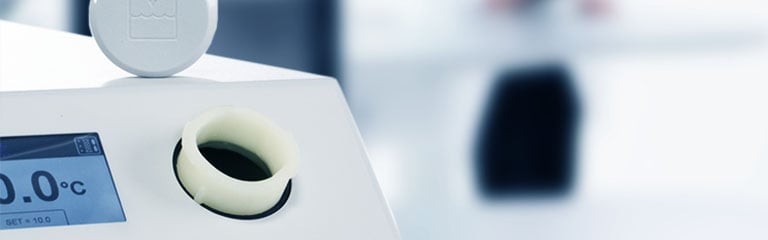
A good chiller should have built-in safety features and control options that can actively protect your equipment and experiments. Check for these features:
- Over-temperature alarms
- Automatic shutdowns
- Flow or pressure monitoring
- Leak detection
- Pressure relief valves
- Stable, precise digital temperature control
- Programmable settings
- Support for external temperature tracking
In addition to these features, some newer models use more energy-efficient compressors or low GWP refrigerants, helping reduce environmental impact and long-term operating costs.
Factor in Other Practical Details
Consider footprint, noise level, mobility, and how easily the unit fits into your lab layout. Likewise, check the electrical requirements and verify that the coolant type is compatible with your equipment.
Most labs use a 50/50 mix of distilled water and glycol. Glycol is the prevalent choice because it provides freeze protection and helps lubricate seals, even if your setpoint doesn’t drop below freezing.
Remember, a well-chosen laboratory chiller can make your operations smoother, protect essential and costly instruments, and improve the reliability of your results.
Not sure whether Thermo Scientific or PolyScience chillers are the right fit? We also carry a wide selection from other trusted brands like Huber and Yamato Scientific. If you need help choosing the best unit for your application, The Lab Depot team is here to assist. Reach us at 1-800-733-2522, by email, or through live chat on our website.
Sources:
https://www.polyscience.com/support/product-selection-tips/select-a-chiller
https://www.jeiotech.com/eng/news/blog.php?ptype=view&idx=4206&page=1&code=blog
https://labproinc.com/blogs/laboratory-equipment/choosing-the-right-lab-chiller-factors-to-consider