

Differentiating Standardized and Calibrated Thermometers
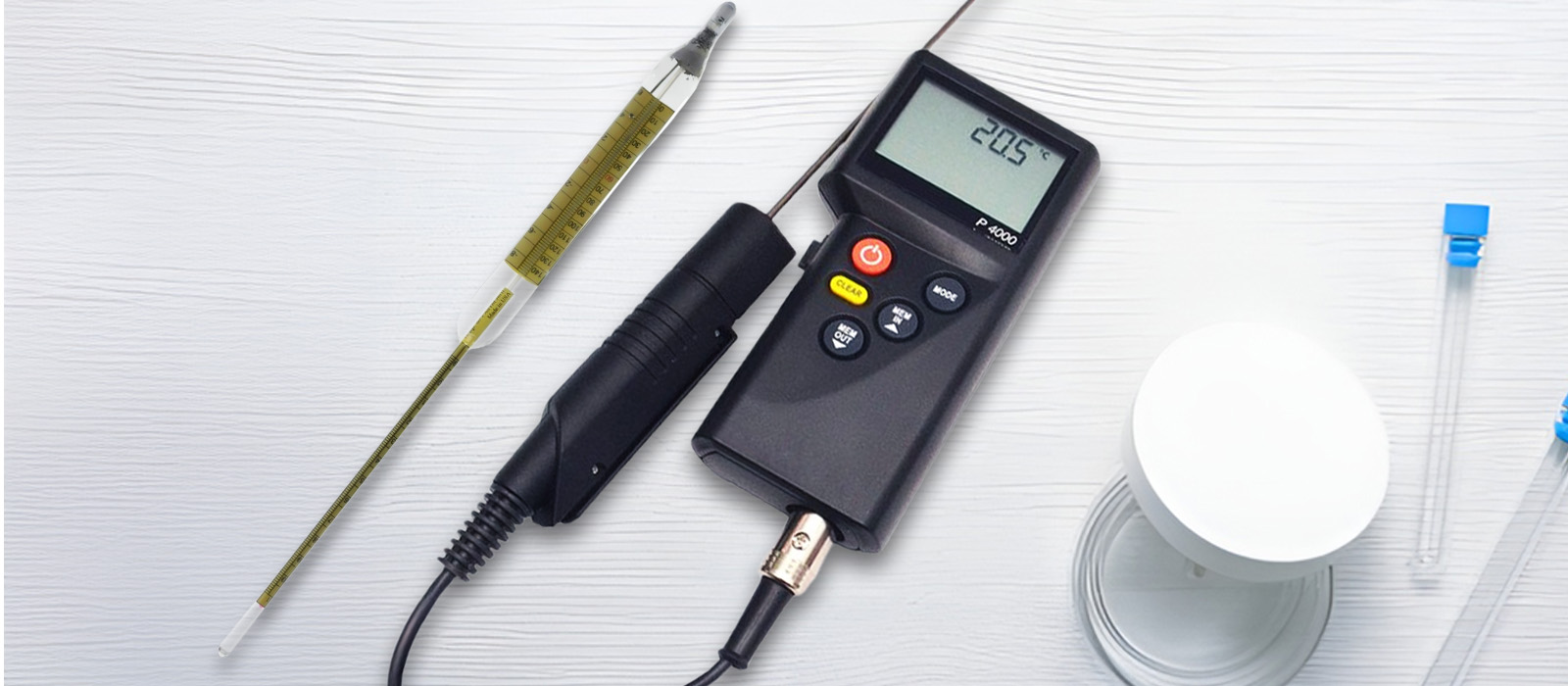
Understand the differences between calibration and standardization to help you decide when choosing a glass or digital thermometer.
When purchasing new laboratory thermometers, you may have seen terms like calibrated, ASTM, and NIST, making the selection process more complex than it should be. Beyond price considerations, understanding these terms is crucial to selecting the appropriate thermometers for your specific applications.
What Does "Standardized" Mean?
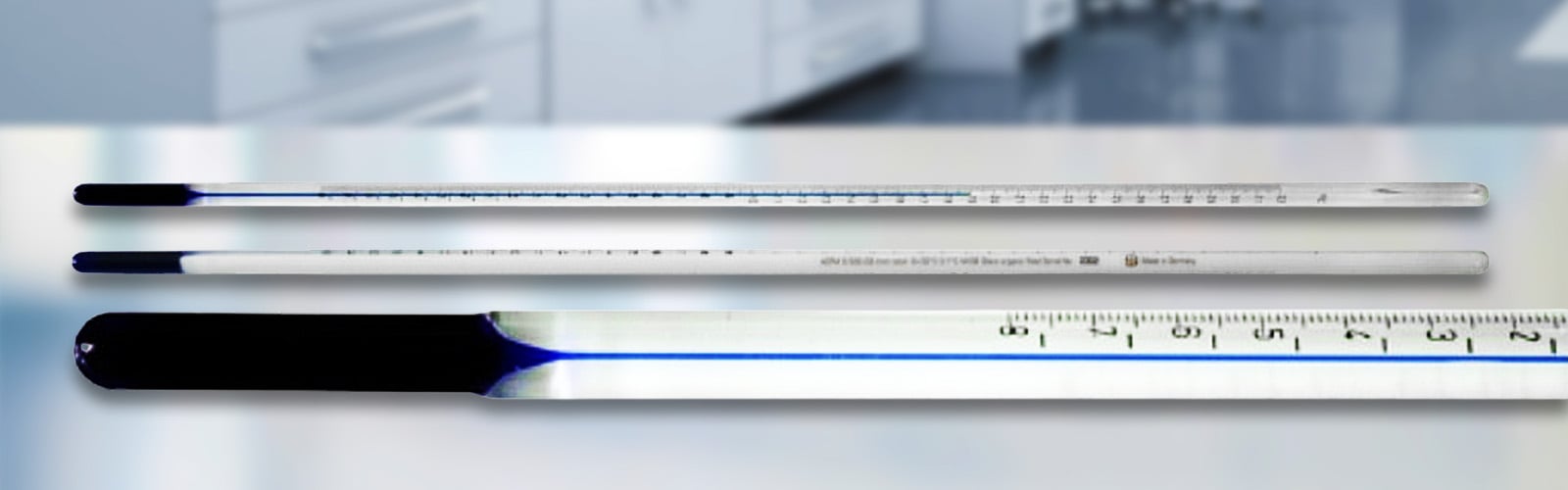
A standardized thermometer is a temperature-measuring device that meets the criteria specified and recognized by standard-setting organizations. These organizations could be ASTM International, formerly American Society for Testing and Materials, or ISO, short for International Organization for Standardization.
Thermometers that meet ISO or ASTM standards follow the organizations' guidelines regarding materials and scale intervals. Besides the design of the thermometers, these guidelines also cover the devices' performance and accuracy tolerances. Simply put, standardized thermometers are designed by manufacturers to comply with a specific reference standard.
Some thermometers are also labeled as NIST-traceable, which means they were verified using a chain of comparisons leading back to NIST standards. However, it's important to understand that this does not imply individual calibration of that specific thermometer. It primarily speaks to the lineage of the reference standards used in its design or manufacturing process.
What is a Calibrated Thermometer?
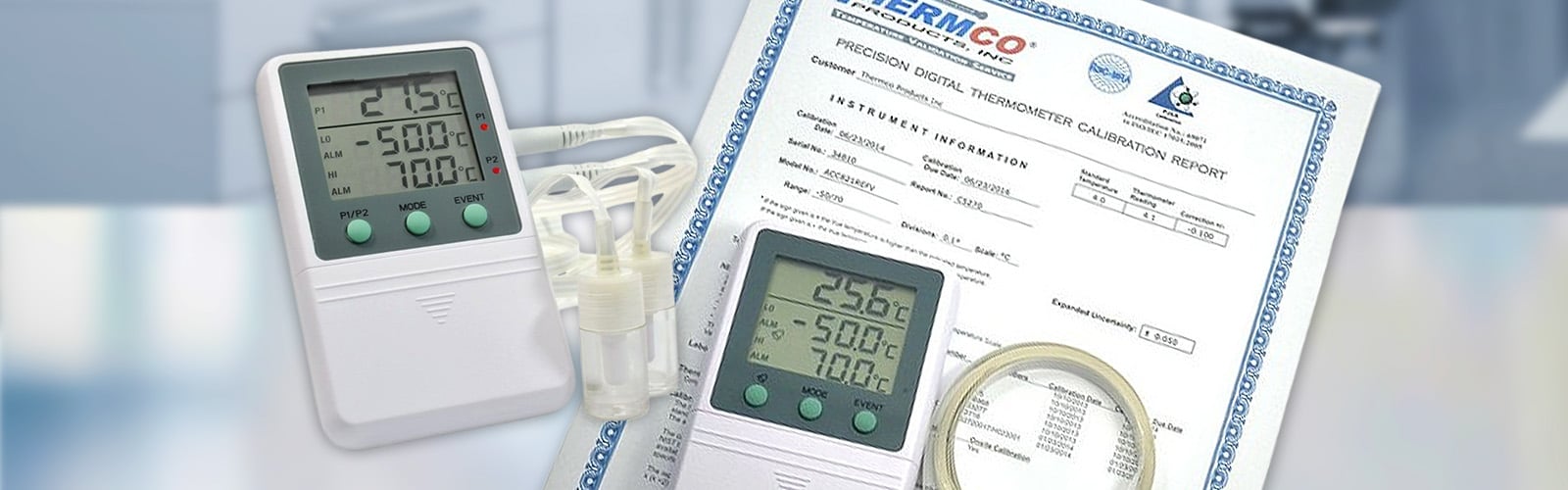
Calibrated thermometers are guaranteed to read temperatures accurately, as each has been tested to match a trusted and known reference standard. When a thermometer shows a discrepancy in temperature readings, it gets adjusted until it displays accurate measurements, aligns with the reference standard, and gets an official certification, typically from NIST.
However, calibration is not a one-time process. Thermometers can degrade and sustain physical damage over time. Prolonged exposure to extreme temperatures, humidity, or vibration can also affect performance and lead to unreliable readings.
To maintain accuracy and compliance, many industries require that thermometers be calibrated regularly, whether annually, twice a year, or more frequently, based on usage and regulatory standards. For instance, a new glass thermometer containing toluene, alcohol, butane, or other organic liquids must be checked every month at the ice point for at least the first six months of use, as NIST requires.
Accredited labs provide calibration services and must issue a calibration certification for every thermometer they calibrate.
Standardized vs. Calibrated
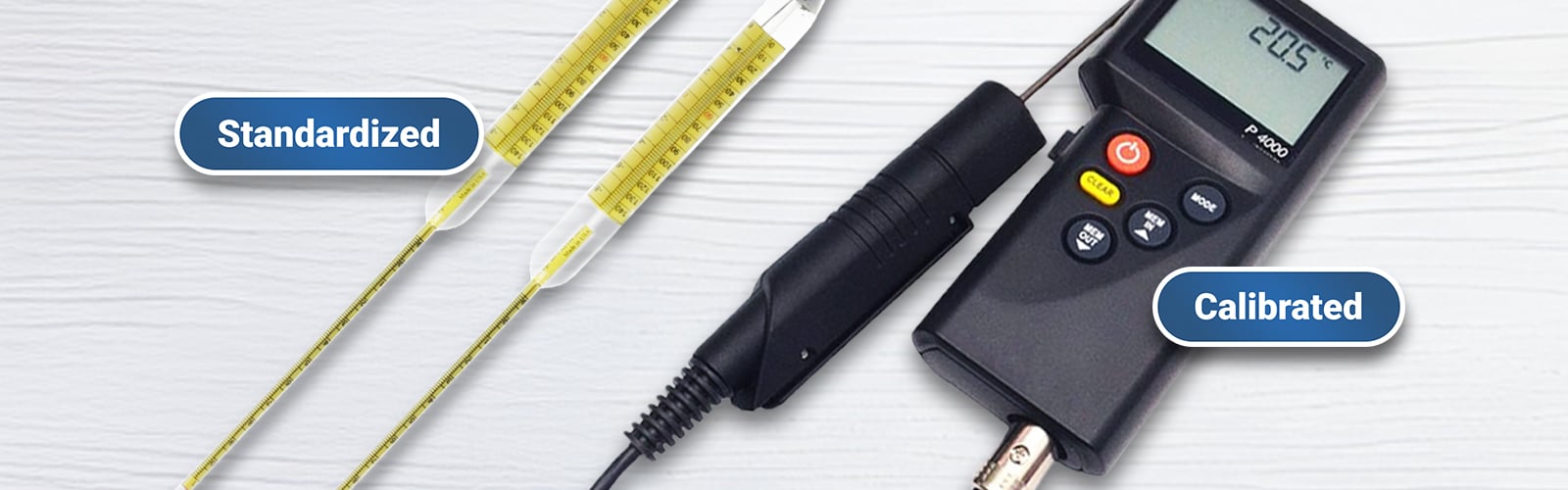
To further clarify these concepts, the following table provides a direct comparison of the key features and characteristics of standardized and calibrated thermometers:
| Feature | Calibrated Thermometer | Standardized Thermometer |
|---|---|---|
| Definition | Tested and adjusted to match a trusted reference | Manufactured to meet standard specifications |
| Adjustability | Can be corrected if found inaccurate | Typically not adjusted post-manufacture |
| Accuracy | Individually verified | For general tolerances |
| Purpose | Ensures accurate readings | Ensures consistency across devices |
| Documentation | Calibration certificate issued | Usually includes manufacturer’s compliance information |
| Traceability | Often NIST-traceable | May be NIST-traceable but not necessarily calibrated |
| Use Case | Regular measurements requiring high accuracy | Reference device or general use in standard-compliant procedures |
Remember that all thermometers, including calibrated ones, are standardized. However, not all standardized thermometers are calibrated. Standardization ensures that the thermometer adheres to an agreed set of specifications, but calibration certifies and elevates a thermometer to a verified state of accuracy, ensuring its reliability for critical measurements.
This distinction is vital to compliance, approved results, and quality control in various environments, such as food processing plants, clinical settings, or pharmaceutical labs.
For calibrated, NIST, or ASTM thermometers, browse through The Lab Depot. Need assistance? Our expert and professional sales team is ready to help if you have product concerns. Contact us at 1-800-733-2522, by email, or through the live chat feature on our website.
Sources:
https://uk.rs-online.com/web/content/discovery/ideas-and-advice/thermometer-calibration-guide
https://nvlpubs.nist.gov/nistpubs/ir/2019/NIST.IR.6969-2019.pdf
https://icllabs.com/what-does-nist-traceability-mean
https://www.fluke.com/en-us/learn/blog/calibration/temperature-calibration-overview
https://thermcoproducts.com/thermometer-calibrating-types-and-methods/
https://fukuda-id.com/6-types-of-thermometers-that-need-to-be-calibrated/